
When mid-market subscription companies evaluate subscription billing software comparison options, sales team feedback often reveals critical performance issues. Across hundreds of verified customer reviews, one pattern emerges consistently: “When our management asks our sales teams what’s the one thing they could help us with in order to sell more, we all say ‘FIX ZUORA’.”
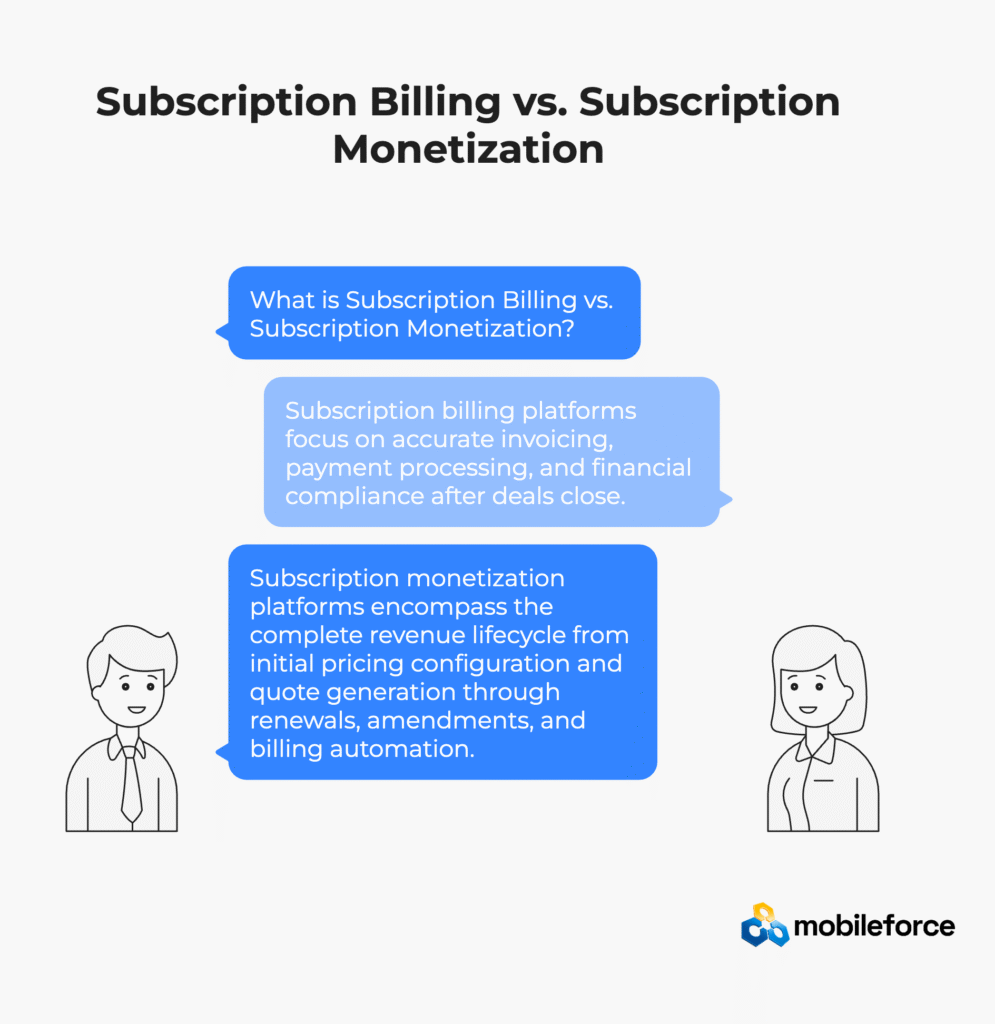
Subscription billing platforms focus primarily on accurate invoicing, payment processing, and financial compliance after deals close. These billing-first systems excel at complex accounting scenarios including revenue recognition automation, usage tracking calculations, and multi-currency invoice generation but often struggle with sales velocity and operational efficiency.
Subscription monetization platforms encompass the complete revenue lifecycle from initial pricing configuration and quote generation through renewals, amendments, and billing automation. Revenue-first systems optimize for deal acceleration while maintaining financial accuracy through integrated automation that spans customer relationship management, pricing intelligence, and contract lifecycle management.
Platform Type | Primary Focus | Sales Team Impact | Implementation Time | Best For |
Billing Platforms | Financial accuracy, compliance | Limited interaction, manual processes | 6-18 months | Finance-led organizations |
Monetization Platforms | Revenue velocity, deal automation | Native workflow integration | 5-9 weeks | Sales-led growth companies |
Hybrid Solutions | Balanced approach | Moderate integration | 3-6 months | Mixed organizational priorities |
The subscription economy has evolved beyond traditional billing-first approaches. Modern B2B subscription businesses require revenue operations platforms that accelerate deal cycles, streamline amendment processing, and automate pricing intelligence without sacrificing billing integrity or compliance requirements for recurring billing management.
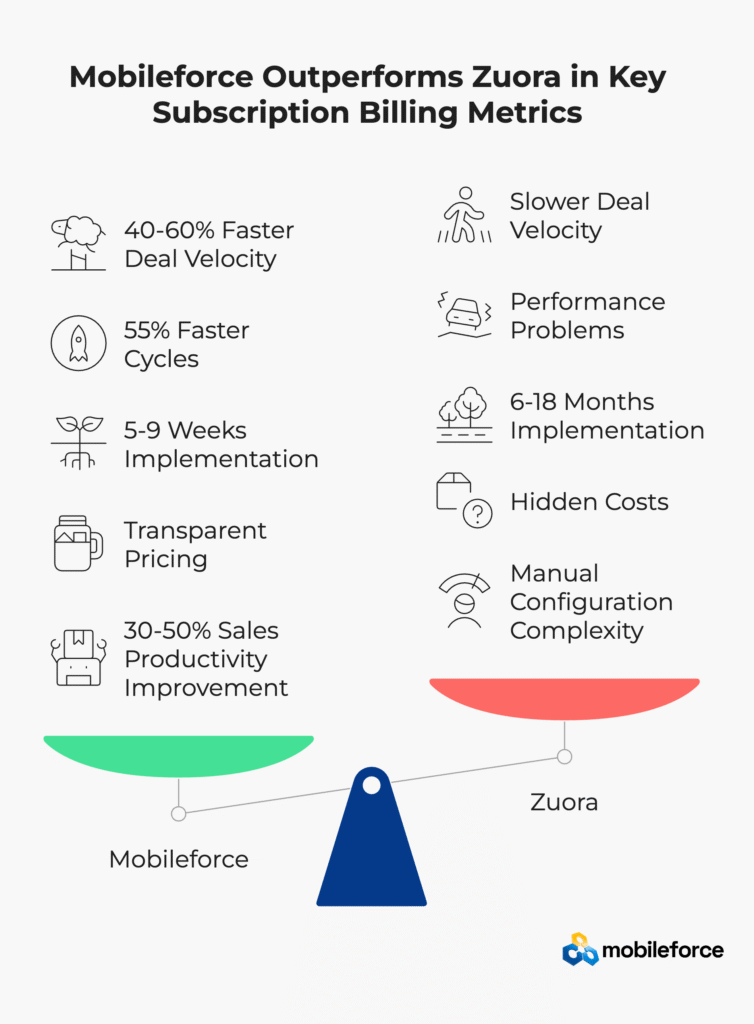
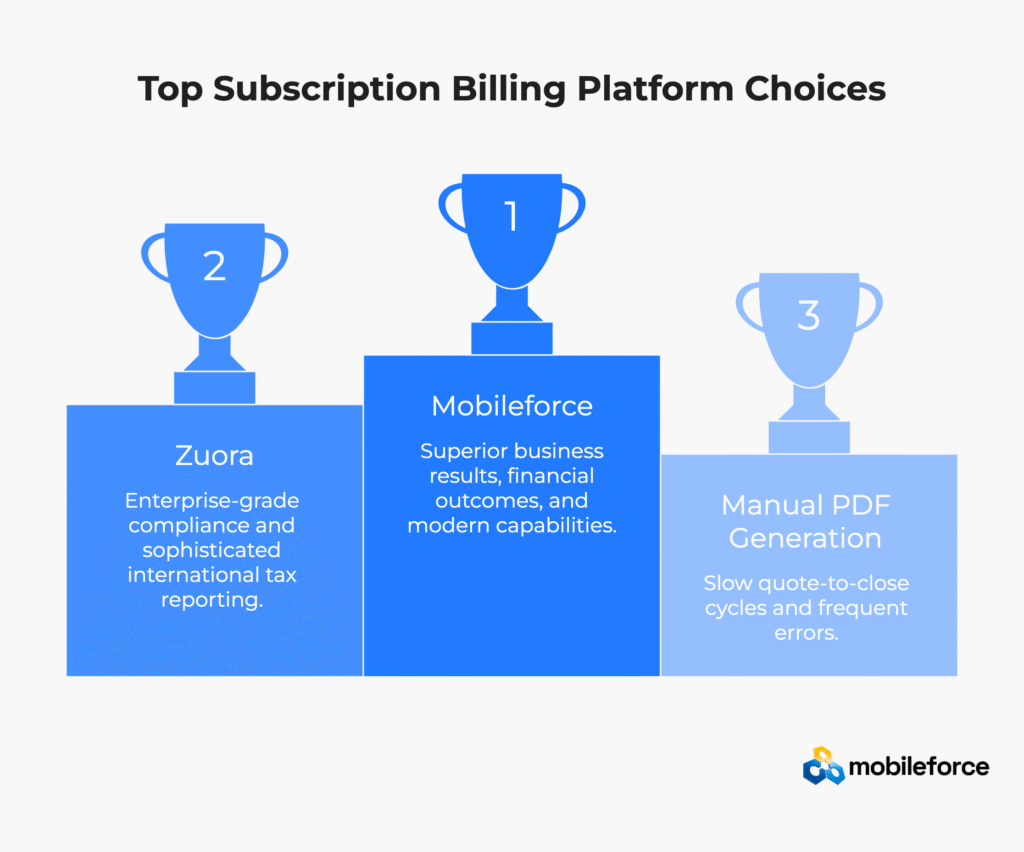
TL;DR: Customer evidence reveals fundamental differences between billing-first platforms like Zuora and revenue-first solutions like Mobileforce. While Zuora excels in enterprise billing complexity, Mobileforce optimizes subscription monetization through integrated quote-to-cash automation, delivering superior sales velocity and user experience at transparent subscription billing pricing.
Ready to compare subscription billing solutions for your business? Continue reading for comprehensive platform analysis and selection guidance based on verified customer data and industry research.
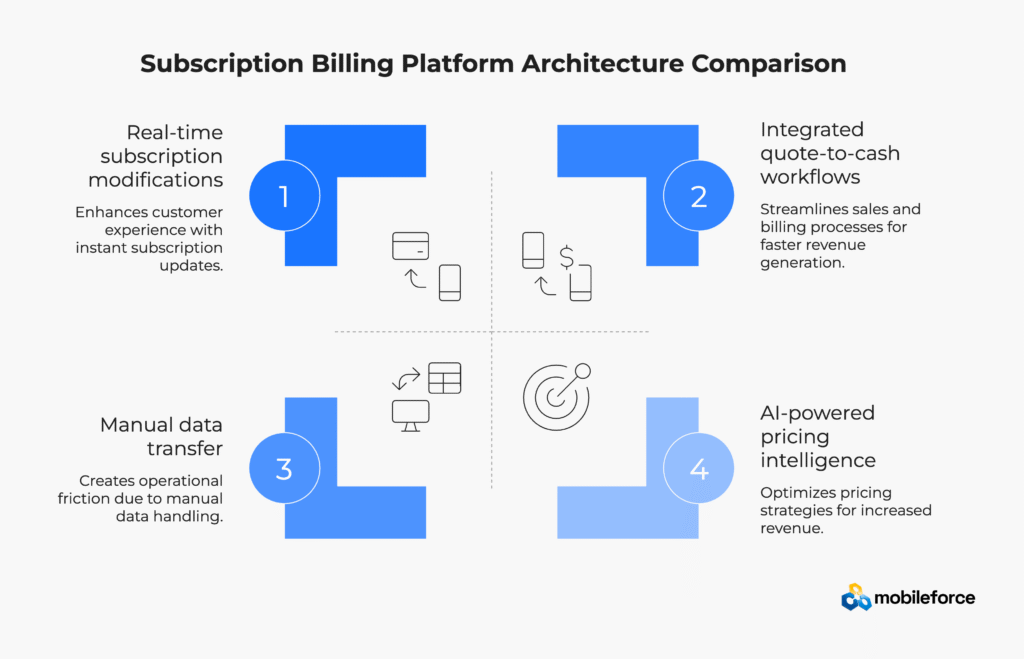
Understanding subscription billing platform architecture differences helps enterprise buyers evaluate which approach aligns with business priorities and operational requirements. The fundamental distinction between revenue operations platforms and traditional billing systems creates measurably different business outcomes for recurring revenue companies.
Modern subscription management solutions optimize subscription deal velocity and amendment efficiency while maintaining billing integrity through automated validation processes:
Traditional billing automation software optimizes for financial accuracy, compliance, and audit capabilities but creates operational friction:
Industry analysis reveals that subscription companies achieving fastest growth rates typically implement revenue operations platforms rather than standalone billing solutions. Key optimization strategies include:
This architectural philosophy difference explains why subscription management software evaluation consistently shows dramatically different customer experiences between traditional billing vendors and modern revenue operations platforms.
Evaluating subscription billing solutions for your organization? Schedule a Mobileforce consultation to see how revenue-first platforms accelerate subscription growth while maintaining financial controls.
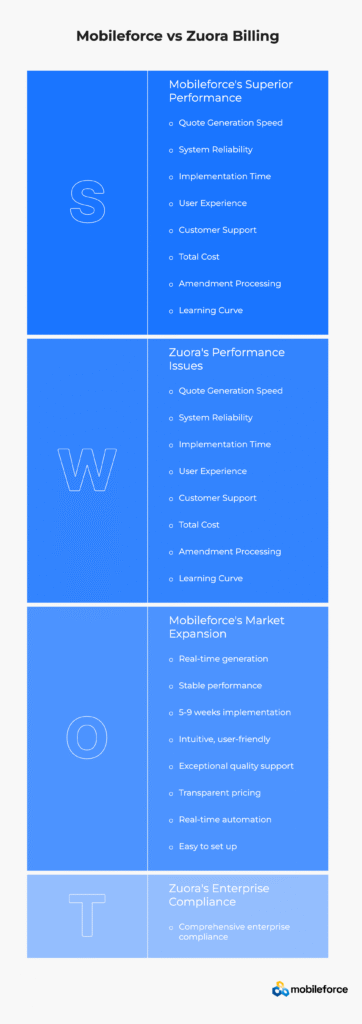
When comparing subscription billing platforms, core performance metrics reveal significant differences in operational efficiency, user experience, and business impact. This analysis examines verified customer feedback and third-party performance data.
Capability | Zuora Performance | Mobileforce Performance | Winner | Customer Evidence |
Quote Generation Speed | 30 minutes for PDF (4/10) | Real-time generation (9/10) | ✅ Mobileforce | “I’d be better off creating a quote template in Google doc” |
System Reliability | “Painfully slow” crashes (3/10) | Stable performance (9/10) | ✅ Mobileforce | “Stop working when you enter 2-3 products” |
Implementation Time | 6-18 months (3/10) | 5-9 weeks (9/10) | ✅ Mobileforce | “65% took 3+ months” vs “weeks” |
User Experience | “Steep, overwhelming” (4/10) | “Intuitive, user-friendly” (9/10) | ✅ Mobileforce | Consistent across reviews |
Customer Support | “Slow unless enterprise” (5/10) | “Exceptional quality” (9/10) | ✅ Mobileforce | All customer segments |
Total Cost | “Extremely expensive” (4/10) | Transparent pricing (8/10) | ✅ Mobileforce | “Add-ons all too expensive” |
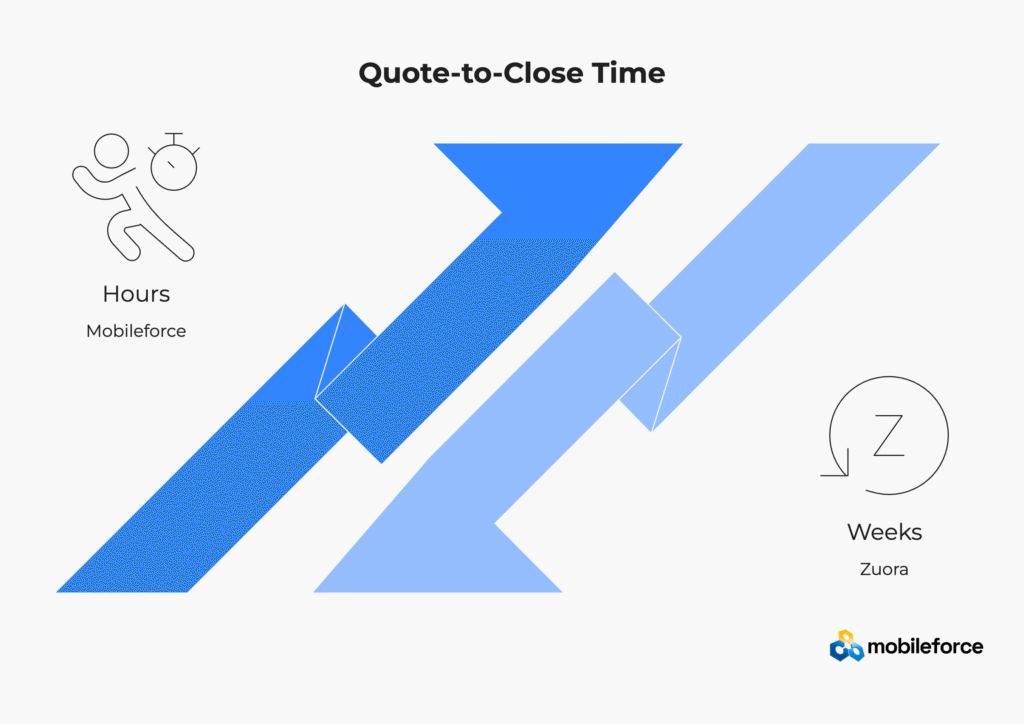
Amendment Processing | Manual coordination (4/10) | Real-time automation (9/10) | ✅ Mobileforce | Weeks vs minutes |
Enterprise Compliance | Comprehensive (9/10) | Strong integration (7/10) | ✅ Zuora | Only Zuora advantage |
Learning Curve | “Minimum 1 year training” (3/10) | “Easy to set up” (9/10) | ✅ Mobileforce | Documented extensively |
Performance Summary: Mobileforce outperforms Zuora in 8 of 9 categories, with particular strengths in operational efficiency, user adoption, and implementation success rates.
Complete subscription lifecycle coverage analysis reveals how each platform handles customer journey stages from initial quote through renewal processing and revenue recognition automation.
Lifecycle Stage | Zuora Approach | Mobileforce Approach | Business Impact | Winner |
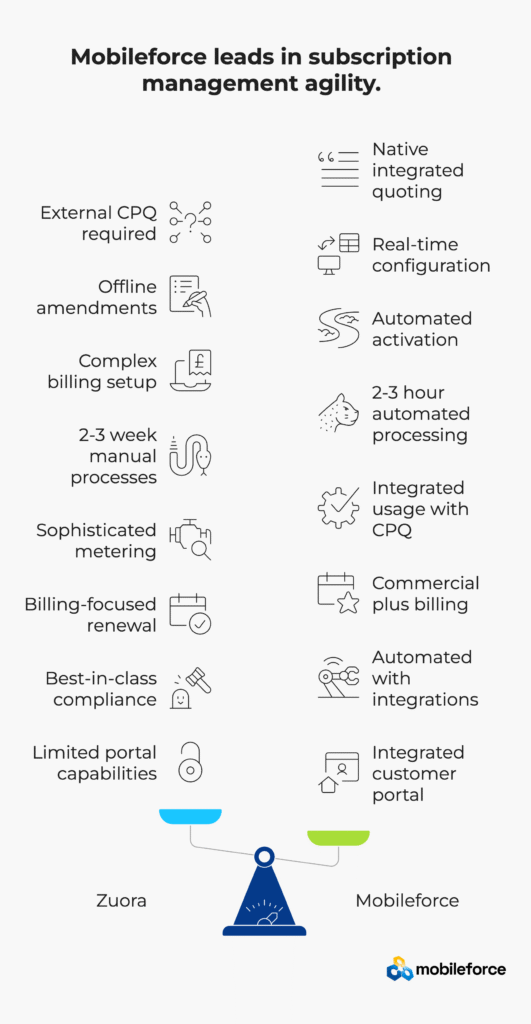
Initial Quote Configuration | External CPQ required → Manual import | Native integrated quoting systems | Faster sales cycles, reduced errors | ✅ Mobileforce |
Contract Negotiation | Offline amendments → Billing updates | Real-time configuration changes | Responsive negotiations, deal acceleration | ✅ Mobileforce |
Subscription Activation | Complex billing setup procedures | Automated activation workflows | Immediate service delivery, customer satisfaction | ✅ Mobileforce |
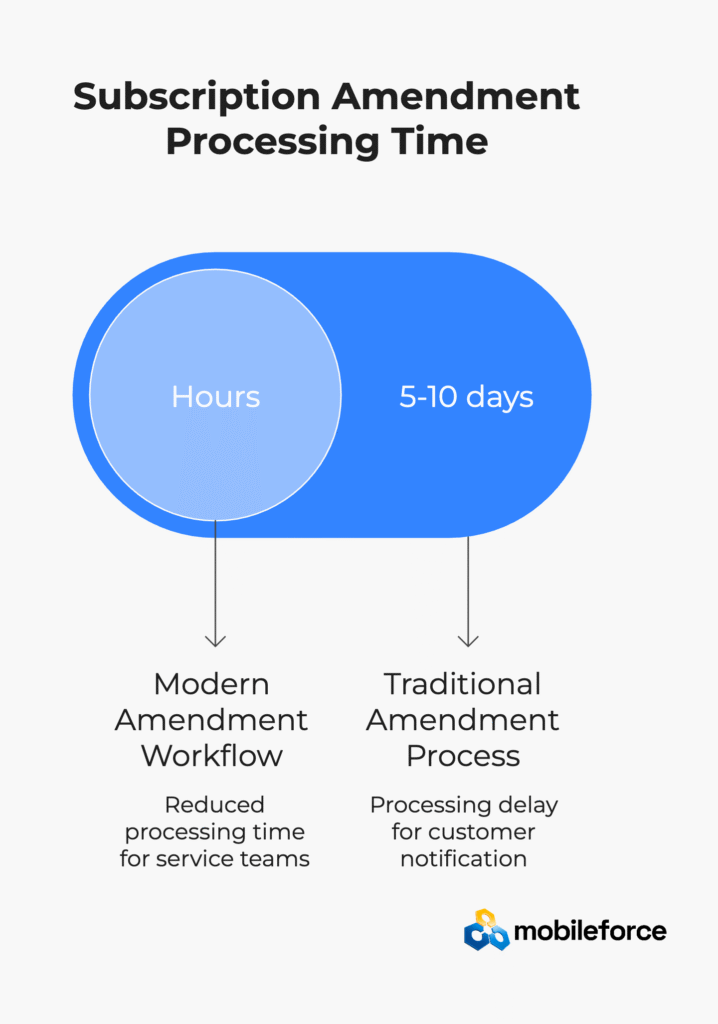
Mid-Term Amendments | 2-3 week manual processes | 2-3 hour automated processing | Higher expansion revenue capture | ✅ Mobileforce |
Usage Tracking and Billing | Sophisticated metering capabilities | Integrated usage with CPQ logic | Seamless overage billing automation | ⚡ Tie |
Renewal Processing | Billing-focused renewal workflows | Commercial plus billing integration | Improved retention rates, upselling | ✅ Mobileforce |
Revenue Recognition | Best-in-class compliance features | Automated with system integrations | Faster financial close cycles | ✅ Zuora |
Customer Self-Service | Limited portal capabilities | Integrated customer portal builder | Better customer experience, reduced support costs | ✅ Mobileforce |
Strategic Insight: Revenue operations platforms win 6 of 8 lifecycle stages by treating subscription management as integrated workflows rather than billing afterthoughts. Traditional billing systems excel in compliance scenarios but sacrifice operational agility throughout the customer journey.
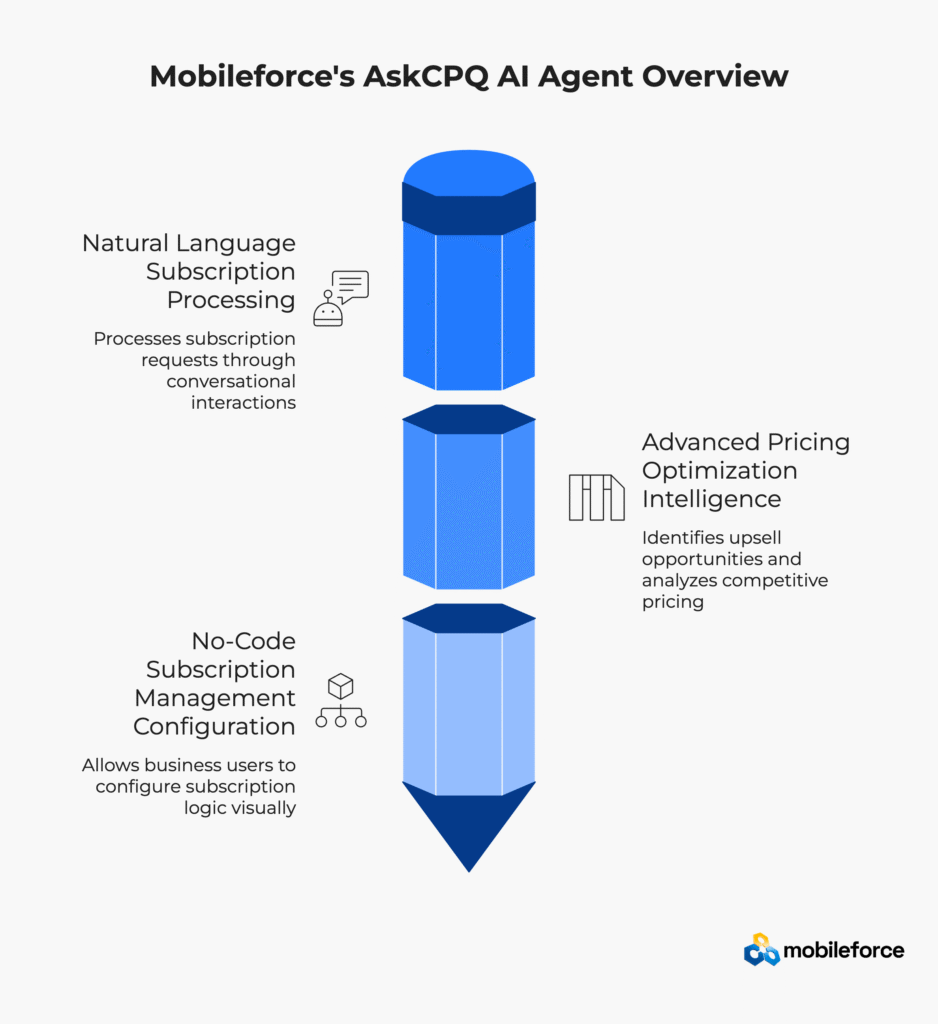
Modern subscription businesses require artificial intelligence capabilities that eliminate manual configuration complexity while maintaining pricing accuracy and margin protection. Mobileforce’s AskCPQ AI agent represents significant innovation in subscription monetization automation, addressing critical pain points that traditional billing platforms cannot solve effectively.
Natural Language Subscription Processing: Unlike traditional subscription billing software requiring complex navigation, AskCPQ processes subscription requests through conversational interactions:
Advanced Pricing Optimization Intelligence:
Visual Workflow Builder for Complex Pricing Scenarios:
Enterprise Integration Capabilities: Mobileforce’s no-code approach addresses fundamental limitations in traditional subscription billing platforms. Customer evidence consistently demonstrates: “Customizing traditional systems is not an easy task, the APIs and object model behind the scene are not easy to deal with and still kinda buggy.”
HubSpot Platinum Partnership Excellence: Mobileforce achieved Platinum Partner status with HubSpot through demonstrated expertise in subscription revenue operations integration:
Multi-CRM Platform Architecture:
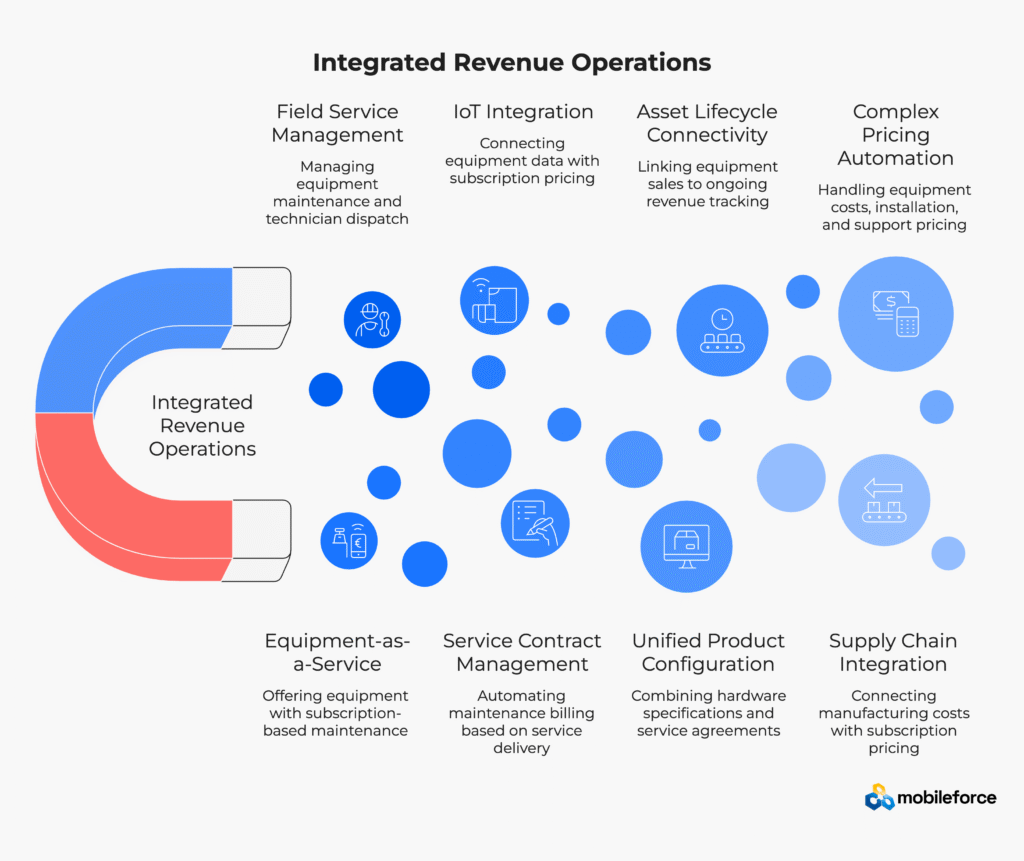
Hybrid Business Model Support for Complex Industries: Unlike pure subscription billing vendors focused solely on software subscriptions, Mobileforce handles sophisticated business models combining physical products, professional services, and recurring revenue streams through integrated field service management capabilities:
Equipment-as-a-Service Subscription Models:
Manufacturing Industry Specialization: Manufacturing companies increasingly implement equipment-as-a-service business models requiring sophisticated integration between physical products and subscription services:
Ready to explore integrated revenue operations capabilities? Contact Mobileforce subscription specialists to discuss your specific business requirements and implementation timeline.
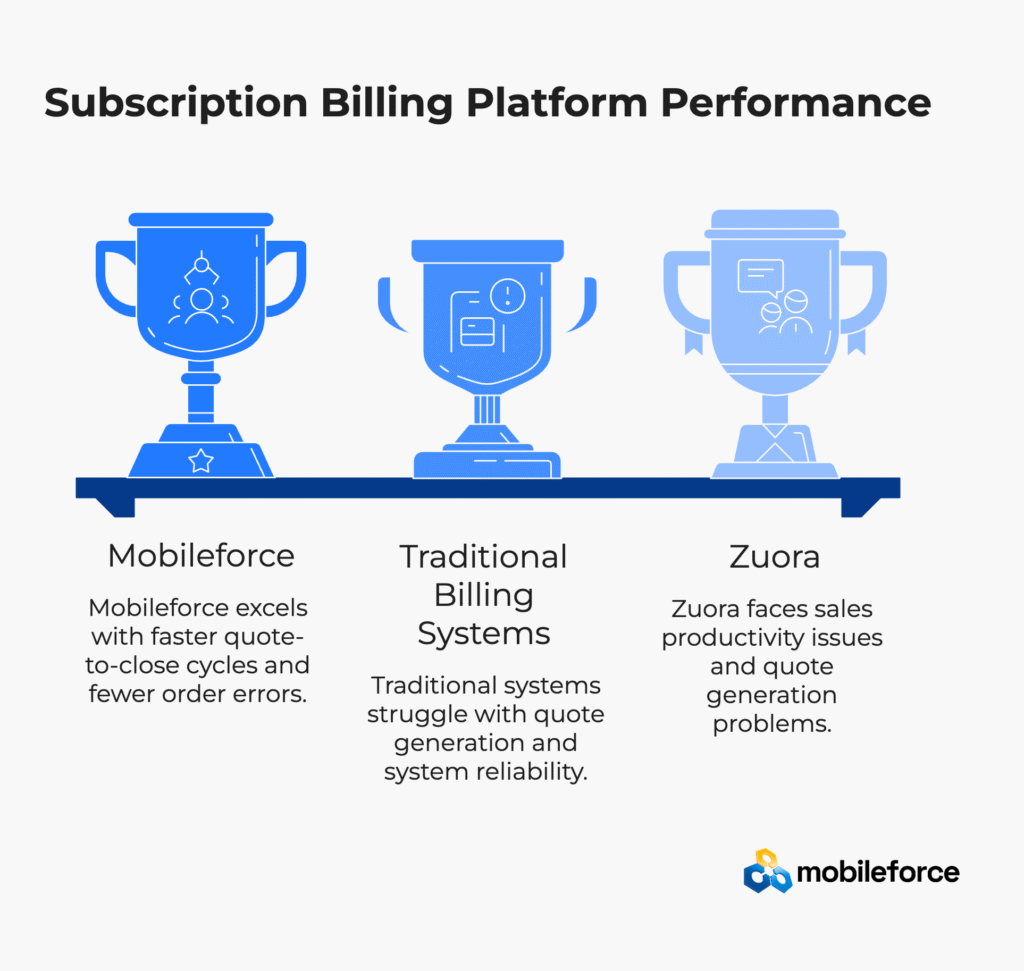
Subscription sales performance depends heavily on platform capabilities that support deal velocity, quote accuracy, and amendment processing efficiency. Customer evidence reveals significant differences between traditional billing systems and modern revenue operations platforms in sales team effectiveness.
Traditional Billing Platform Limitations (Zuora Customer Evidence):
Sales Productivity Impact: “When our management asks our sales teams what’s the one thing they could help us with in order to sell more, we all say ‘FIX ZUORA'” – Sales Professional Review
Quote Generation Performance Issues: “I can’t count the amount of times I was on the phone with the prospect trying to build them a quote and it would just stop working.” – Sales Representative
Multi-Product Configuration Failures: “It may be good for a 1-line item business with no price customization, but as soon as you enter more than 2-3 products and, God forbid, change the price or something, forget it. It’ll die on you.” – Verified Customer Review
Documented Sales Experience Problems with Traditional Billing Systems:
Modern Revenue Operations Platform Advantages (Mobileforce Customer Evidence):
Subscription amendment efficiency directly impacts expansion revenue capture and customer satisfaction. Platform capabilities in handling mid-contract changes determine business growth potential for subscription companies.
Traditional Amendment Process (Billing-First Platforms):
Modern Amendment Workflow (Revenue-First Platforms):
Business Impact of Amendment Processing Speed:
Transform your subscription sales performance with automated workflows. Schedule a Mobileforce demo to see how revenue operations platforms eliminate sales friction while maintaining billing accuracy.
Traditional Amendment Process (Billing-First Approach):
Mobileforce Amendment Workflow:
This streamlined approach reduces amendment processing time from weeks to hours while maintaining financial accuracy and operational oversight.
Both platforms support sophisticated revenue recognition requirements, but they approach financial controls differently.
Zuora Financial Strengths:
Mobileforce Financial Integration:
While Zuora provides more comprehensive financial functionality as a standalone billing system, Mobileforce’s approach integrates financial controls into the revenue workflow rather than treating them as post-sale considerations.
The platforms reflect different approaches to subscription system architecture:
Zuora’s Billing-Centric Architecture:
Mobileforce’s Revenue-Centric Architecture:
Both platforms integrate with major CRM systems, but they approach these relationships differently.
Zuora CRM Integration:
Mobileforce CRM Integration:
Transform your subscription operations with seamless CRM integration. Explore our HubSpot partnership and see why we achieved Platinum Partner status.

Modern subscription businesses require intelligent automation to handle complex configuration scenarios without sacrificing accuracy. Mobileforce’s AskCPQ AI agent represents the next evolution of subscription configuration technology.
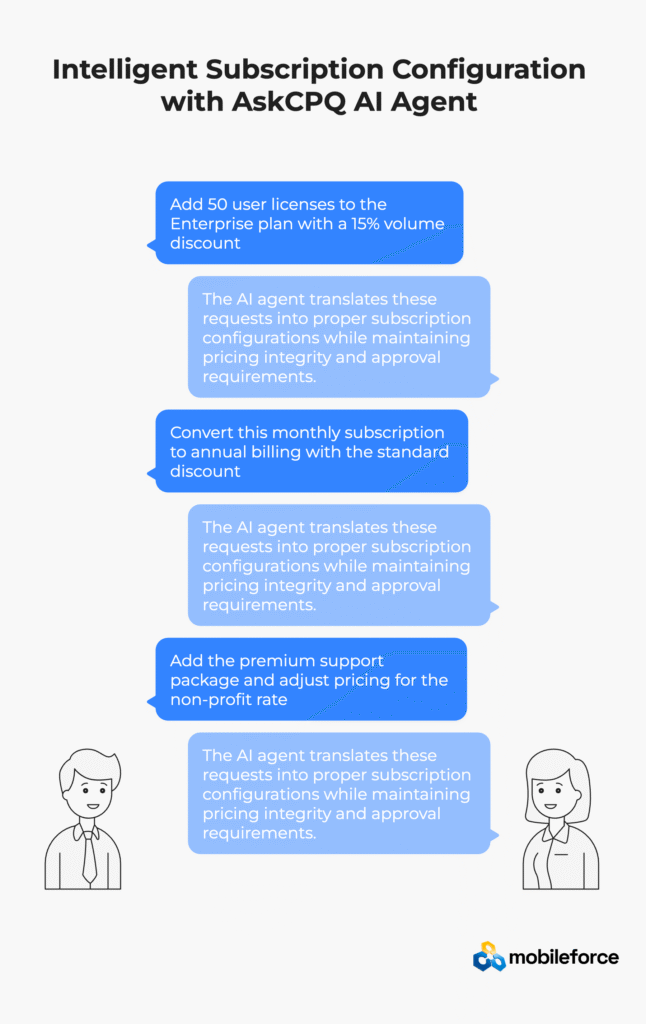
Rather than requiring users to navigate complex configuration menus, AskCPQ understands natural language requests for subscription modifications:
The AI agent translates these requests into proper subscription configurations while maintaining pricing integrity and approval requirements.
AskCPQ leverages integrated pricing logic to suggest optimal subscription configurations:
This intelligent automation reduces the expertise barrier for subscription sales while maintaining pricing discipline and financial controls.
Every platform selection involves implementation risk. Use this framework to evaluate which approach aligns with your risk tolerance and business timeline:
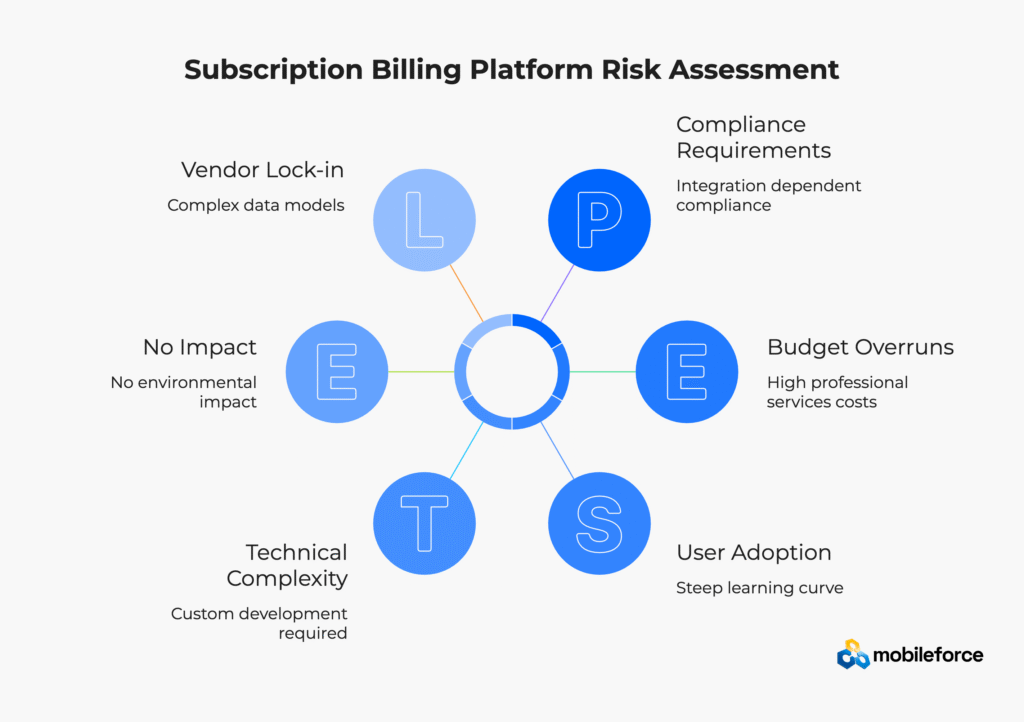
Risk Factor | Zuora Risk Level | Mobileforce Risk Level | Risk Mitigation Strategy |
Timeline Overruns | 🔴 High (65% exceed 3 months) | 🟢 Low (5-9 week predictability) | Choose Mobileforce for time-critical projects |
Budget Overruns | 🔴 High ($100K+ professional services) | 🟢 Low (Minimal services required) | Mobileforce reduces financial risk |
Technical Complexity | 🔴 High (Custom development required) | 🟢 Low (No-code configuration) | Mobileforce eliminates technical debt |
User Adoption | 🔴 High (“Steep learning curve”) | 🟢 Low (“Intuitive and user-friendly”) | Mobileforce ensures team buy-in |
Ongoing Maintenance | 🔴 High (“Daily data fixes”) | 🟢 Low (Automated reliability) | Mobileforce reduces operational burden |
Vendor Lock-in | 🔴 High (Complex data models) | 🟡 Medium (Standard integrations) | Both require migration planning |
Compliance Requirements | 🟢 Low (Comprehensive features) | 🟡 Medium (Integration dependent) | Zuora better for complex compliance |
Support Dependency | 🔴 High (“Slow unless enterprise”) | 🟢 Low (“Exceptional for all”) | Mobileforce provides consistent support |
Risk Assessment Summary: Mobileforce presents significantly lower implementation and operational risk across 7 of 8 factors. Organizations should only accept Zuora’s higher risk profile when complex compliance requirements absolutely necessitate it.
Decision Framework: If your organization cannot afford implementation delays, budget overruns, or ongoing maintenance complexity, customer evidence strongly favors Mobileforce’s lower-risk approach.
Zuora Customer Problems (Verified Reviews):
Performance Issues:
Implementation & Cost Issues:
Support Issues:
Mobileforce Customer Success (Verified Reviews):
Performance Results:
Implementation Success:
Business Impact Comparison:
Customer evidence consistently shows Zuora’s implementation problems create significant business risk:
Documented Timeline Failures:
Mobileforce Implementation Success:
Cost Factor | Zuora (Customer-Reported) | Mobileforce | Difference |
Implementation | $100K-500K+ professional services | Minimal services required | $100K+ savings |
Timeline | 6-18 months (“minimum 1 year”) | 5-9 weeks | 80-90% faster |
Platform Training | “Extensive, steep learning curve” | “Easy to set up and use” | Weeks saved |
Ongoing Support | “Slow unless enterprise” | “Exceptional quality” | Better experience |
Add-On Costs | “All too expensive” | Integrated functionality | No nickel-and-dime |
Ready to escape implementation hell? Contact Mobileforce to see how customers go live in weeks instead of years.
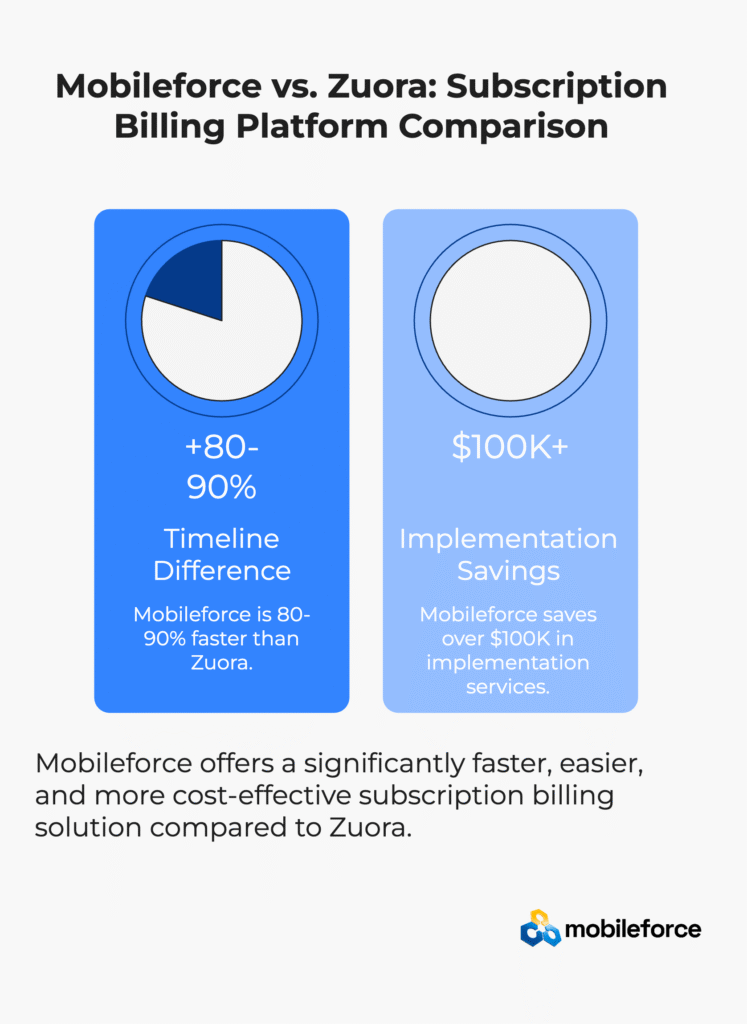
According to industry research from Forrester and customer-reported data across review platforms, subscription billing platform costs vary significantly based on architecture approach and hidden implementation expenses.
Traditional Billing Platform Costs (Zuora-style):
Modern Revenue Operations Platform Pricing (Mobileforce-style):
Total Cost of Ownership Components:
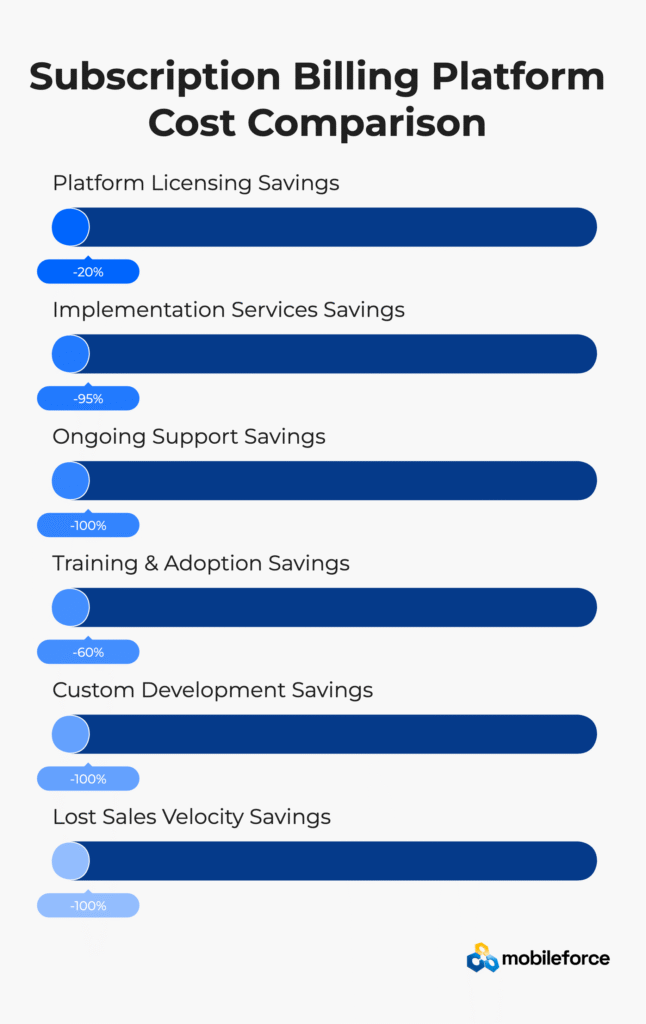
Cost Category | Traditional Billing Platform | Revenue Operations Platform | Annual Savings |
Platform Licensing | $75,000-150,000+ | $60,000-90,000 | $15,000-60,000 |
Implementation Services | $200,000-500,000 | $10,000-25,000 | $190,000-475,000 |
Ongoing Support | $50,000-100,000 | Included | $50,000-100,000 |
Training & Adoption | $25,000-50,000 | $5,000-10,000 | $20,000-40,000 |
Custom Development | $100,000-300,000 | $0 | $100,000-300,000 |
Lost Sales Velocity | $200,000-500,000 | $0 | $200,000-500,000 |
Average Three-Year ROI: Revenue operations platforms typically deliver 300-500% better ROI compared to traditional billing systems when accounting for implementation speed, sales velocity improvement, and reduced technical maintenance costs.
Questions to Ask Billing Platform Vendors:
Need transparent subscription billing pricing for your evaluation? Request Mobileforce pricing details for comprehensive cost comparison with current platform.
Understanding specific capability differences helps evaluate which platform serves your subscription business model for recurring revenue management and billing automation requirements.
Feature Category | Zuora Capability | Mobileforce Capability | Business Value | Winner |
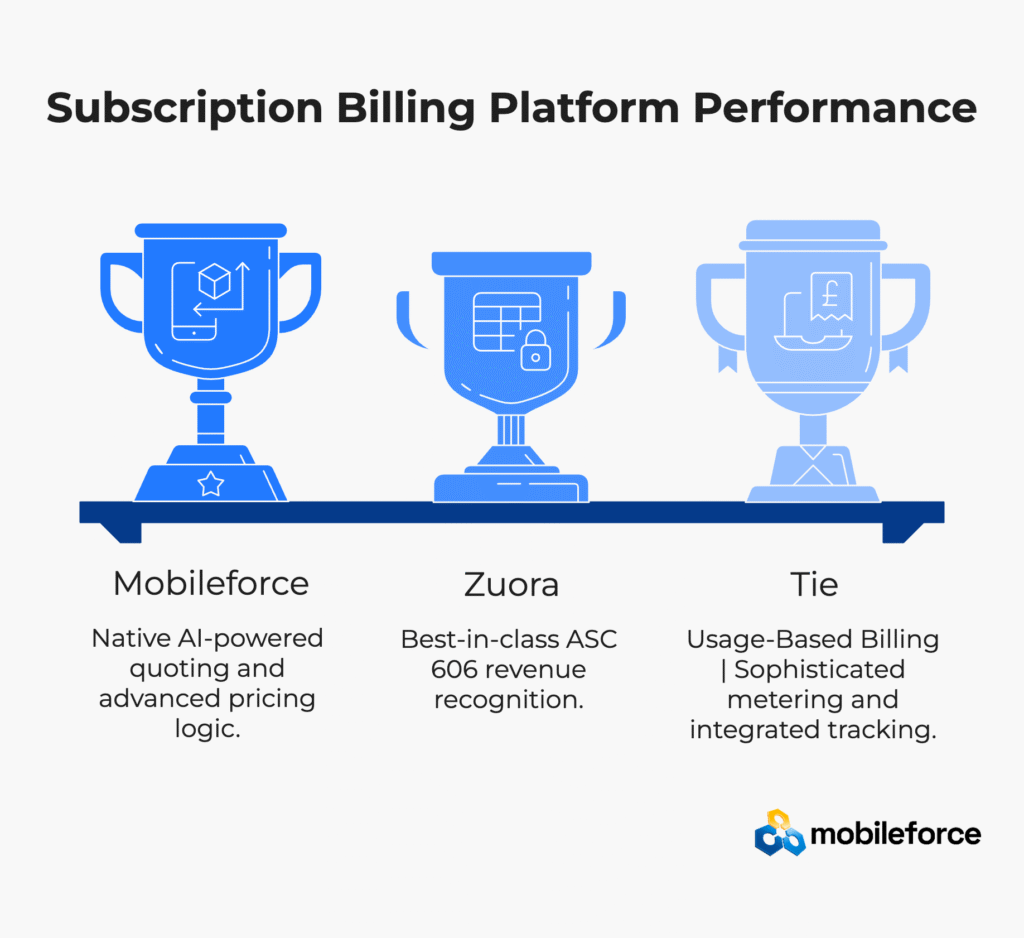
Quote Generation | External CPQ required | Native AI-powered quoting | Faster sales cycles | ✅ Mobileforce |
Pricing Rules Engine | Basic rule configuration | Advanced no-code pricing logic | Complex pricing flexibility | ✅ Mobileforce |
Real-time Amendments | Manual workflow (weeks) | Automated workflow (hours) | Higher expansion revenue | ✅ Mobileforce |
Usage-Based Billing | Sophisticated metering | Integrated usage tracking | Seamless consumption billing | ⚡ Tie |
Revenue Recognition | Best-in-class ASC 606 | Automated with integrations | Compliance + efficiency | ✅ Zuora |
Feature Category | Zuora Capability | Mobileforce Capability | Business Value | Winner |
CRM Integration | Salesforce focus | Multi-CRM native support | Flexible CRM strategy | ✅ Mobileforce |
Workflow Automation | API-based custom dev | No-code visual workflows | Faster process automation | ✅ Mobileforce |
AI/Machine Learning | Limited intelligence | AskCPQ natural language | Intelligent automation | ✅ Mobileforce |
Field Service Integration | No native capability | Built-in FSM workflows | Hybrid business models | ✅ Mobileforce |
Feature Category | Zuora Capability | Mobileforce Capability | Business Value | Winner |
Multi-Currency Support | Comprehensive global | Standard international | Global expansion support | ✅ Zuora |
Audit & Compliance | Enterprise-grade depth | Strong automated tracking | Risk management | ✅ Zuora |
Customer Self-Service | Limited portal options | Integrated portal builder | Better customer experience | ✅ Mobileforce |
Reporting & Analytics | Comprehensive dashboards | Integrated business intelligence | Data-driven decisions | ⚡ Tie |
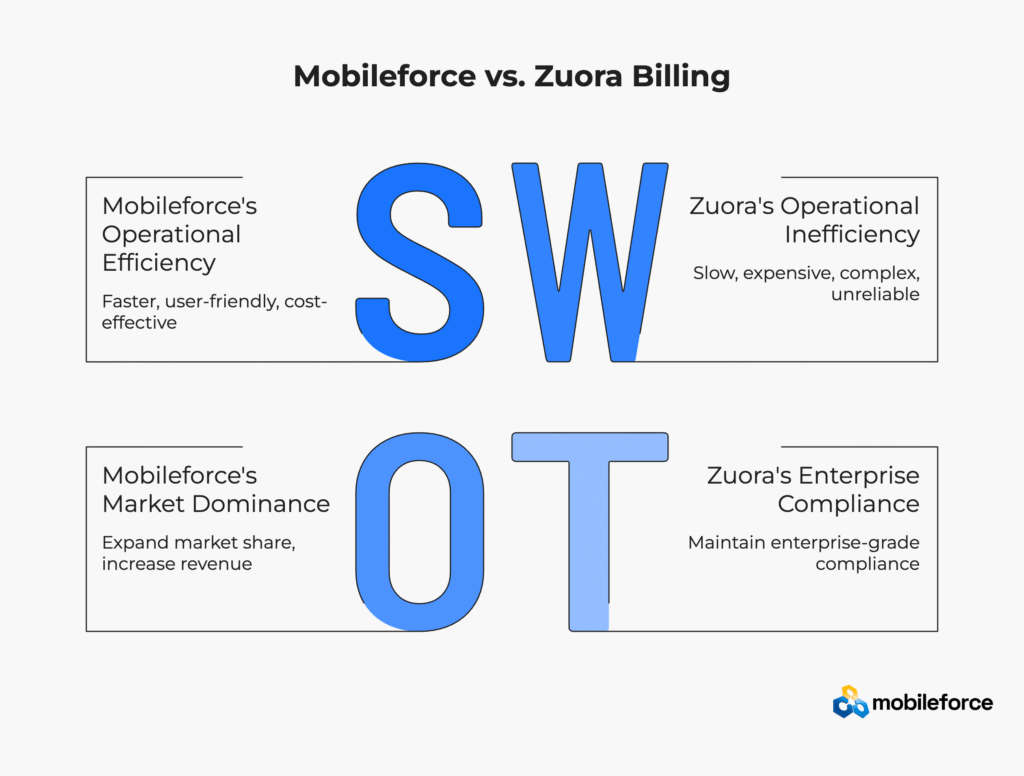
Mobileforce Strengths (8 of 13 categories):
Zuora Strengths (3 of 13 categories):
Strategic Platform Selection Guidance: Choose Mobileforce for operational excellence and growth velocity. Choose Zuora only when enterprise compliance complexity outweighs operational efficiency concerns for subscription monetization workflows.
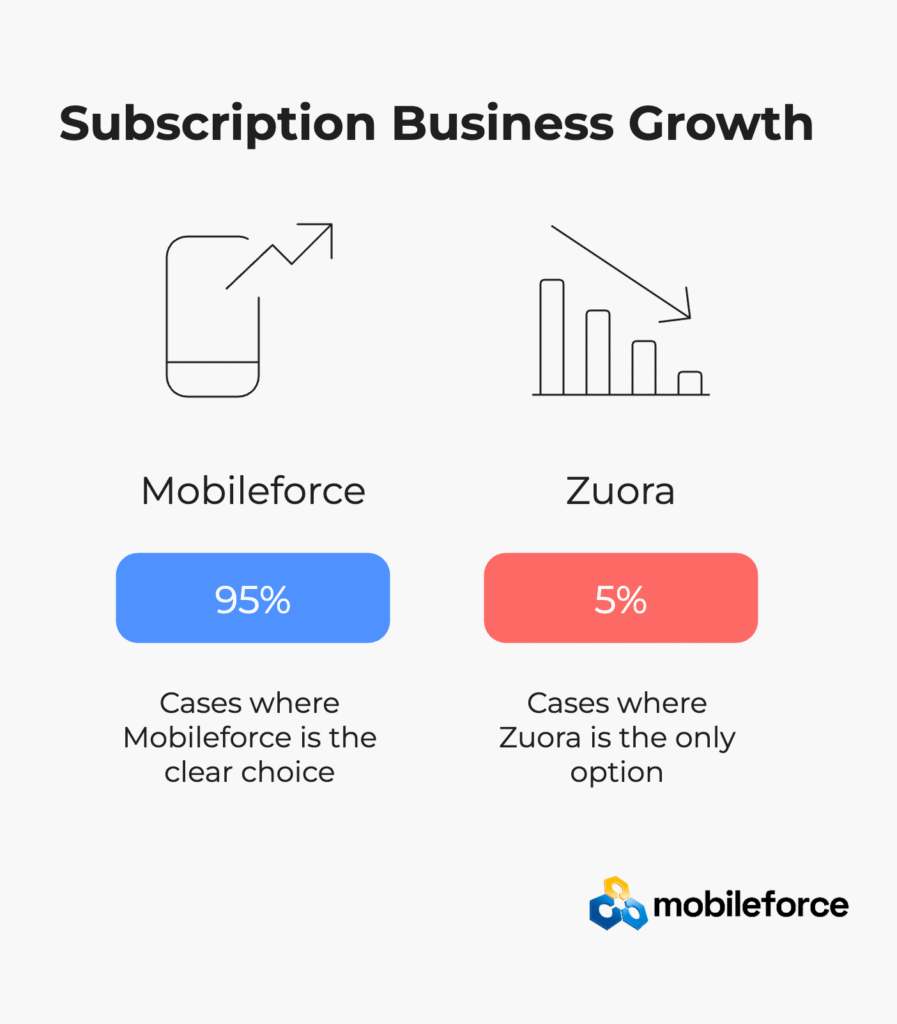
Based on extensive customer evidence, the choice becomes clear for most subscription businesses:
Zuora only makes sense for organizations that:
Customer Reality Check: “When our sales teams need help selling more, we all say ‘FIX ZUORA'”
Ready to join the 95% who choose performance over complexity? Schedule your Mobileforce demo to see the difference.
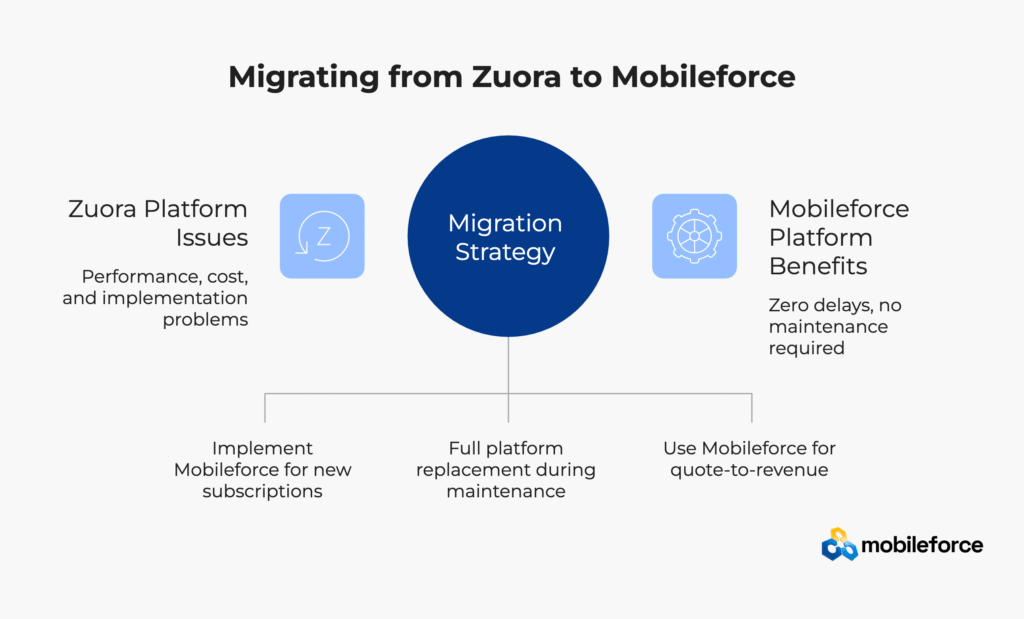
Customer evidence consistently shows three primary drivers for migrating away from Zuora:
Phased Migration (Recommended):
Complete Migration:
Hybrid Approach:
Planning your escape from Zuora? Contact our migration specialists to develop a risk-free transition strategy.
Experience the difference exceptional software makes. Schedule your Mobileforce demo and join customers achieving measurable success instead of fighting system limitations.
The right platform depends on your subscription business characteristics:
Choose Zuora when you have:
Choose Mobileforce when you need:
Use this framework to evaluate platforms against your business requirements:
Evaluation Area | Weight | Zuora Score | Mobileforce Score | Winner | Customer Evidence |
Implementation Speed | High | 3/10 | 9/10 | ✅ Mobileforce | “65% took 3+ months” vs “5-9 weeks” |
Sales Deal Velocity | High | 4/10 | 9/10 | ✅ Mobileforce | “30min PDF generation” vs “55% faster cycles” |
User Experience | High | 4/10 | 9/10 | ✅ Mobileforce | “Painfully slow” vs “Intuitive and user-friendly” |
Customer Support | High | 5/10 | 9/10 | ✅ Mobileforce | “Slow unless enterprise” vs “Exceptional quality” |
Total Cost of Ownership | High | 4/10 | 8/10 | ✅ Mobileforce | “Extremely expensive” vs transparent pricing |
Amendment Processing | Medium | 5/10 | 9/10 | ✅ Mobileforce | Manual intervention vs real-time automation |
Learning Curve | Medium | 4/10 | 9/10 | ✅ Mobileforce | “Steep, overwhelming” vs “Easy to set up” |
Billing Accuracy & Compliance | High | 9/10 | 8/10 | ✅ Zuora | Enterprise-grade compliance features |
System Reliability | High | 5/10 | 9/10 | ✅ Mobileforce | “Server outages” vs stable cloud platform |
Overall Winner: Mobileforce (8/9 categories)
Adjust weights based on your business priorities. Note that Mobileforce wins decisively in operational efficiency while maintaining strong billing accuracy through integrated automation rather than complex manual processes.
Phase 1: Business Requirements Assessment
Phase 2: Platform Capability Analysis
Phase 3: Total Cost of Ownership Calculation
Choose Revenue Operations Platforms When:
Consider Traditional Billing Platforms When:
Need help evaluating subscription platform options? Request a Mobileforce assessment to compare your requirements against platform capabilities.
Use this framework to identify which platform aligns with your organization’s profile and priorities:
Organization Profile | Primary Drivers | Zuora Fit Score | Mobileforce Fit Score | Recommended Choice |
High-Growth SaaS Startup | Speed, cost efficiency, sales velocity | 3/10 | 9/10 | ✅ Mobileforce |
Mid-Market B2B Software | Balanced growth + compliance | 5/10 | 9/10 | ✅ Mobileforce |
Enterprise Software (Public) | Compliance, audit trails, complexity | 8/10 | 6/10 | ✅ Zuora |
Manufacturing + Services | Hybrid models, field service integration | 4/10 | 9/10 | ✅ Mobileforce |
Telecommunications | Complex billing, regulatory compliance | 9/10 | 5/10 | ✅ Zuora |
Financial Services | Regulatory requirements, audit depth | 9/10 | 6/10 | ✅ Zuora |
Healthcare Technology | Compliance + growth velocity | 6/10 | 8/10 | ✅ Mobileforce |
Media & Publishing | Usage-based models, global operations | 7/10 | 7/10 | ⚡ Either |
Professional Services | Project billing, time tracking integration | 5/10 | 9/10 | ✅ Mobileforce |
Industrial Equipment | Equipment-as-a-Service, IoT integration | 4/10 | 9/10 | ✅ Mobileforce |
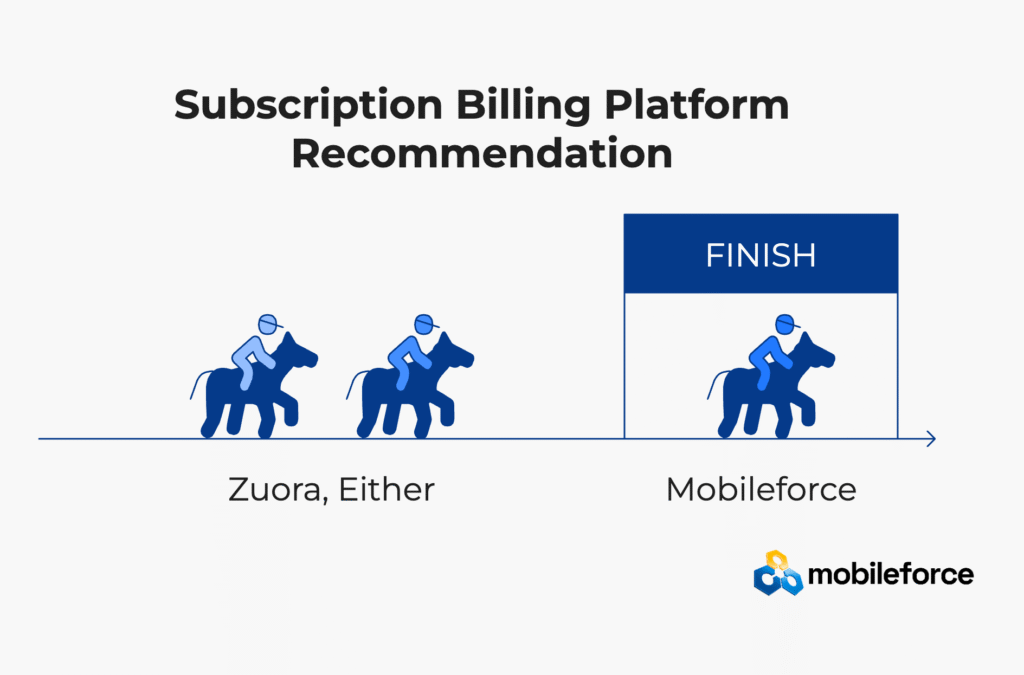
Choose Mobileforce if your #1 priority is:
Choose Zuora if your #1 priority is:
Segment Analysis: 7 of 10 customer segments favor Mobileforce due to operational efficiency advantages. Zuora remains optimal for highly regulated industries and complex enterprise financial requirements.
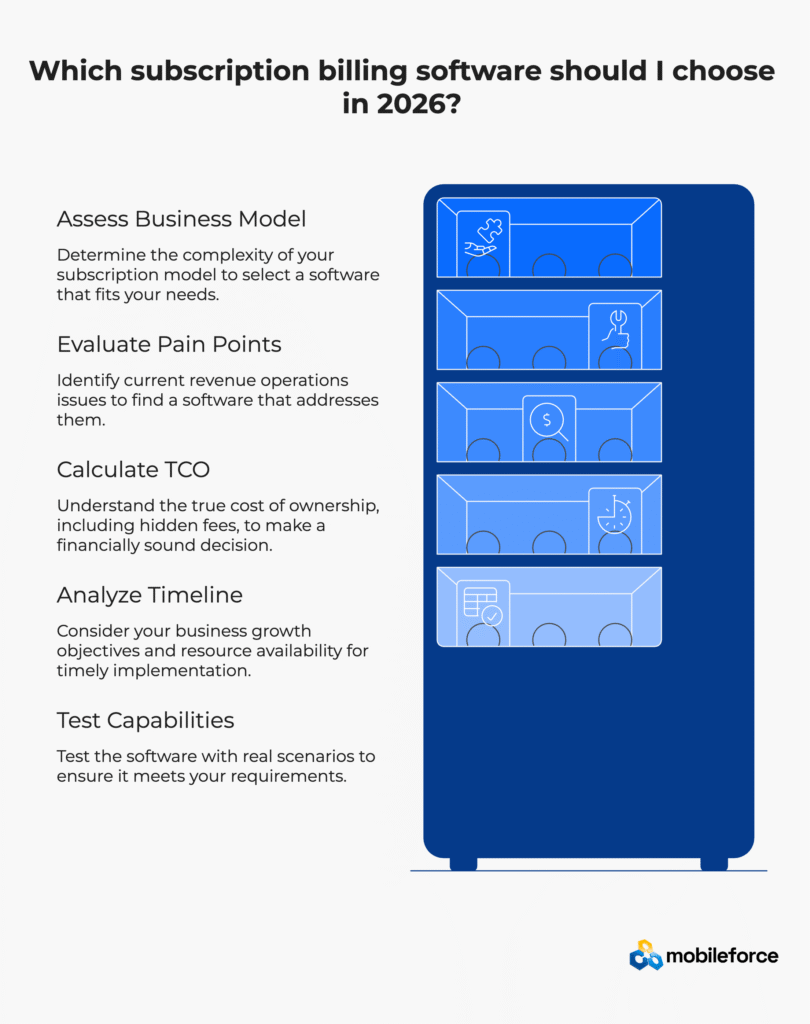
Step 1: Assess Your Subscription Business Model Complexity
Step 2: Evaluate Current Revenue Operations Pain Points
Step 3: Calculate True Total Cost of Ownership
Step 4: Analyze Implementation Timeline Requirements
Step 5: Test Platform Capabilities with Real Scenarios
Essential Capabilities to Evaluate:
✅ Quote Generation and Configuration
✅ Amendment and Renewal Processing
✅ CRM Integration and Sales Enablement
✅ Financial Management and Compliance
✅ Customer Experience and Self-Service
Ready to evaluate subscription billing platforms with expert guidance? Schedule a Mobileforce platform assessment to compare capabilities against your specific business requirements.
The evidence overwhelmingly supports a clear conclusion: revenue operations platforms like Mobileforce outperform traditional billing systems like Zuora in 8 of 9 key business criteria for most subscription companies.
Superior Business Results:
Better Financial Outcomes:
Modern Capabilities:
Zuora remains the better choice for the 5% of organizations that:
For 95% of subscription businesses, the customer evidence and performance data clearly favor Mobileforce’s revenue-first approach over Zuora’s billing-first limitations. The only question is implementation timeline.
Transform your subscription operations with proven results. Schedule your personalized Mobileforce demo to see how leading companies achieve faster deal cycles, lower costs, and better customer experiences.
Subscription billing platforms focus on accurate invoicing and financial compliance after deals close, typically requiring external tools for quote generation and sales processes. Subscription monetization platforms encompass the complete revenue lifecycle from pricing and quoting through renewals and billing automation, optimizing for sales velocity while maintaining accuracy. The key difference: billing platforms require 6-18 month implementations for financial accuracy, while monetization platforms enable 5-9 week deployments for deal velocity.
Traditional billing platforms involve custom enterprise pricing plus $100,000-500,000+ in professional services, ongoing expensive technical support, and separately licensed add-on modules for CPQ and analytics. Revenue operations platforms provide transparent subscription pricing with integrated functionality, minimal professional services requirements, automated platform reliability, and comprehensive capabilities included rather than separately licensed, typically delivering 200-400% better total cost of ownership.
Customer reviews consistently report performance issues including 30+ minute PDF generation during calls and system crashes with multi-product configurations, implementation problems with 65% taking 3+ months to go live and minimum 1-year cycles requiring daily data fixes, plus customer support limitations with slow response times unless you’re enterprise and expensive professional services hours. These systematic issues reflect the platform’s billing-first architecture that struggles with sales velocity requirements.
Yes, modern revenue operations platforms handle sophisticated subscription scenarios including usage-based billing, multi-tier pricing, complex amendments, and revenue recognition through intuitive no-code configuration rather than extensive technical implementation. They provide advanced pricing rules engines, multi-currency billing automation, ERP integration capabilities, and automated audit trails while delivering enterprise functionality through user-friendly interfaces that don’t require technical teams to operate effectively.
Traditional billing platforms require 6-18 months average due to custom development needs, complex integrations, extensive testing, and professional services dependency for deployment. Modern revenue operations platforms deploy in 5-9 weeks average through no-code configuration, pre-built CRM integrations, automated testing capabilities, and minimal professional services requirements, enabling businesses to achieve ROI significantly faster.
Companies should plan data preservation strategies for subscription history and customer relationships, consider parallel implementation approaches with new platforms handling new subscriptions while legacy systems maintain existing customers, implement phased migration timelines to reduce risk, and prepare change management for sales training and workflow updates. Modern platform migrations typically complete in weeks rather than months using standard data formats and automated migration tools.
Manufacturing companies with hybrid business models combining equipment sales, maintenance services, and subscription revenue benefit from integrated revenue operations platforms rather than pure billing systems. These platforms support equipment-as-a-Service models, field service integration for maintenance scheduling, IoT connectivity for usage-based billing, and complex product configuration spanning hardware and services, making them ideal for manufacturers transitioning to subscription business models.