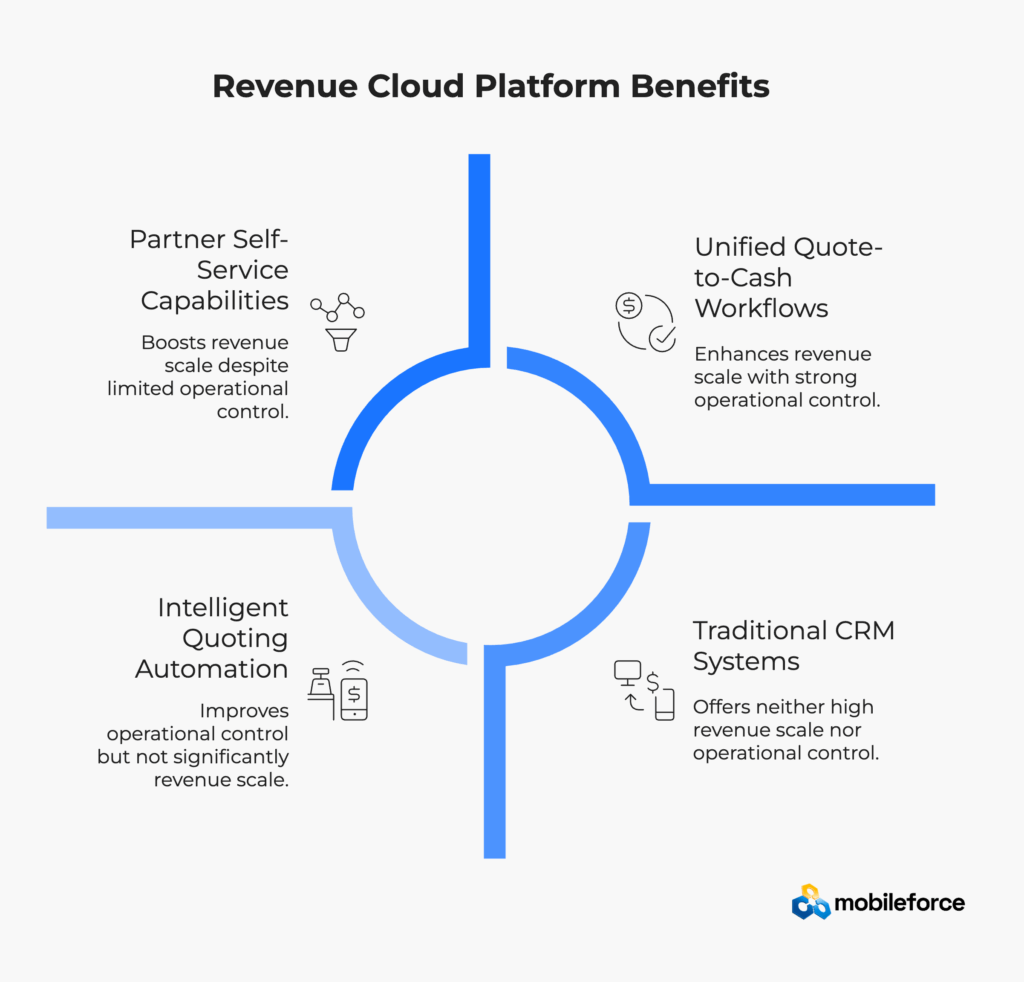
Revenue Cloud platforms are transforming how companies manage channel partnerships and partner quoting processes. According to McKinsey’s 2024 B2B Pulse Survey, 34% of B2B revenue now comes from e-commerce channels, with companies reporting 25% shorter sales cycles through channel partnerships. Businesses need specialized solutions beyond traditional CRM and CPQ tools. Modern Revenue Operations platforms combine intelligent quoting automation, partner self-service capabilities, and unified quote-to-cash workflows to help organizations scale their indirect sales while maintaining pricing governance and operational control.
Picture this scenario: Your top channel partner receives an urgent RFP on Friday afternoon. The prospect needs a comprehensive quote with custom configurations by Monday morning to close their quarterly budget. Your partner has two options: wait for your internal team’s availability on Tuesday, or deliver a competitive quote in hours using self-service tools.
This velocity gap determines who wins in today’s compressed B2B buying cycles. According to McKinsey’s 2024 B2B Pulse Survey, B2B buyers now use an average of 10 interaction channels during their purchasing journey, with decision timelines shrinking by 40% over the past three years. Sales teams and manufacturing partners lose deals not because of product limitations, but because their quoting systems can’t match competitor response speeds.
Modern channel operations face specific speed barriers that traditional platforms can’t address:
The acceleration challenge isn’t about basic CPQ functionality – it’s about enabling instant partner autonomy. Fast-growing channel programs require platforms that business users can modify immediately, that work seamlessly across mobile and desktop environments, and that guide partners through complex configurations using intelligent automation.
Traditional platforms create velocity barriers at every interaction. Code-dependent configurations delay business rule updates by weeks. Desktop-only interfaces prevent field sales acceleration. Disconnected quote-to-service workflows slow customer onboarding. Most critically, the absence of intelligent assistance forces partners to navigate complex product catalogs manually, extending response times when speed determines deal outcomes.
Acceleration Barrier | Traditional Platform Reality | Impact on Channel Velocity |
Configuration Changes | Requires developer involvement | 2-6 week implementation delays |
Mobile Quote Generation | Desktop-dependent interfaces | Lost on-site closing opportunities |
Product Catalog Navigation | Manual lookup processes | Extended partner response times |
Quote-to-Service Handoff | Disconnected system workflows | Delayed customer onboarding |
Ready to see how next-generation platforms eliminate these velocity barriers? Explore Mobileforce’s acceleration-built CPQ solution and discover how leading companies achieve instant partner autonomy.

Channel acceleration requires platforms that business users can modify instantly without technical dependencies. When market conditions shift or competitive pressures mount, revenue teams need immediate configuration changes that don’t wait for IT queues or vendor professional services.
Instant Business Rule Adaptation forms the foundation of channel velocity. Partners need platforms they can customize in real-time – updating pricing structures, modifying approval workflows, and adapting product configurations as market demands change. Traditional code-dependent systems create weeks of delay between business decisions and platform implementation.
Advanced business-speed features include:
Anywhere-Access Quote Generation enables field teams to capture opportunities at the point of customer interaction. Modern channel acceleration requires platforms that work seamlessly across mobile and desktop environments, with full offline capability ensuring quotes can be generated even without internet connectivity.
Advanced mobile capabilities include:
Intelligent Product Navigation transforms how partners interact with complex catalogs. Instead of manual lookup processes that extend response times, AI-powered platforms guide partners through configuration decisions using natural language processing and predictive recommendation engines.
AI-Powered Quoting Assistance through intelligent agents helps partners navigate complex product ecosystems instantly. Machine learning algorithms analyze customer history, competitive positioning, and technical requirements to suggest optimal configurations in seconds rather than hours.
Seamless Workflow Integration eliminates handoff delays between sales, service, and revenue recognition. Channel acceleration platforms must connect the entire customer journey – from initial quote through service delivery and ongoing support – preventing the velocity loss that occurs when teams work in disconnected systems.
Native CRM Integration Without Data Lag ensures real-time information flow across all partner touchpoints. Whether connecting to HubSpot, Salesforce, Microsoft Dynamics, or Creatio, acceleration platforms eliminate the sync delays that create pricing discrepancies and slow down deal velocity.
Advanced integration features include:
Channel acceleration platforms must provide real-time visibility into velocity metrics that drive partner performance optimization. Advanced analytics identify bottlenecks in the quote-to-close process and recommend acceleration strategies based on successful partner behaviors.
Key acceleration analytics include:
Acceleration Capability | Traditional Platform | Channel Acceleration Platform |
Partner Self-Service | Limited access | Full autonomy with governance |
Real-Time Integration | Manual sync | Automated data flow |
Pricing Governance | Static rules | Dynamic AI-powered optimization |
Analytics Depth | Basic reports | Predictive insights |
Mobile Accessibility | Limited | Full mobile optimization |

McKinsey’s research validates the channel transformation trend. According to their 2024 B2B Pulse Survey, 71% of B2B suppliers now offer e-commerce capabilities, with 39% of buyers willing to spend $500,000+ per order remotely. This shift drives the need for sophisticated partner enablement platforms.
Companies implementing automated channel management report significant improvements:
Transform your channel performance with data-driven insights. Schedule a revenue analysis consultation to benchmark your current channel operations.
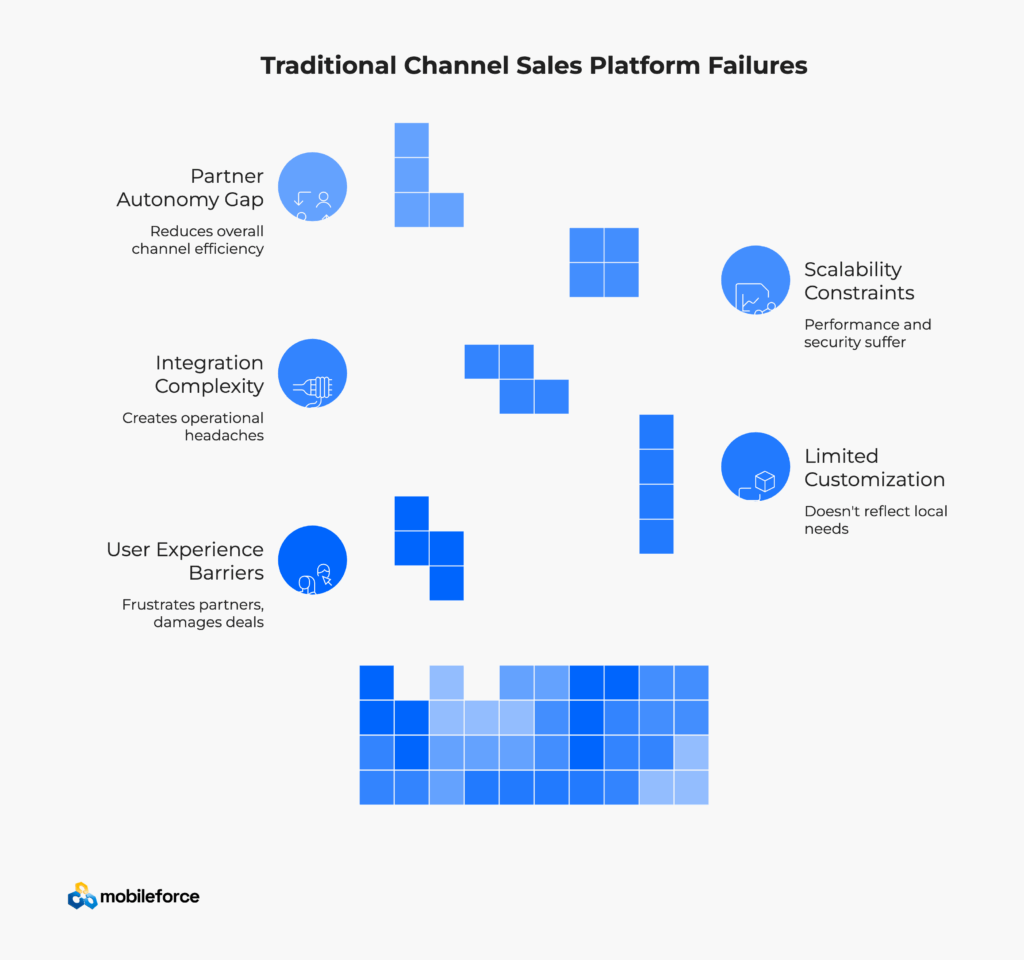
Most legacy systems were designed for direct sales teams, not partner ecosystems. These platforms create several critical gaps that limit channel effectiveness and partner satisfaction rates across the indirect sales management landscape.
User Experience Barriers represent the most visible problem in traditional channel sales software comparison studies. Traditional CPQ systems often require extensive training and feature complex navigation that partners find frustrating. When quoting tools are difficult to use, partners avoid them or make errors that damage deal quality.
Key UX challenges include:
Limited Customization Flexibility prevents partners from adapting solutions to their market needs. Rigid configuration options force partners into one-size-fits-all approaches that don’t reflect local market conditions or customer preferences.
Integration Complexity creates operational headaches for both vendors and partners. When systems don’t communicate effectively, data inconsistencies emerge, and manual workarounds become necessary.
Common integration problems include:
Scalability Constraints become apparent as partner networks grow. Legacy platforms struggle to support hundreds or thousands of partner users while maintaining performance and security standards.
Challenge Category | Annual Cost Impact | Productivity Loss | Partner Satisfaction |
User Experience Barriers | $50K-$200K | 30-40 hours/month | 40% below benchmark |
Integration Complexity | $100K-$500K | 50-80 hours/month | 50% below benchmark |
Scalability Constraints | $200K-$1M | 100+ hours/month | 60% below benchmark |
Customization Limitations | $75K-$300K | 40-60 hours/month | 45% below benchmark |
Traditional distributor portal software fails to address the fundamental requirement for partner autonomy within vendor governance frameworks. This creates a negative cycle where partners become increasingly dependent on vendor resources, reducing overall channel efficiency.
Transform your channel operations with purpose-built solutions. Schedule a personalized demo to see how Mobileforce addresses these traditional platform limitations.
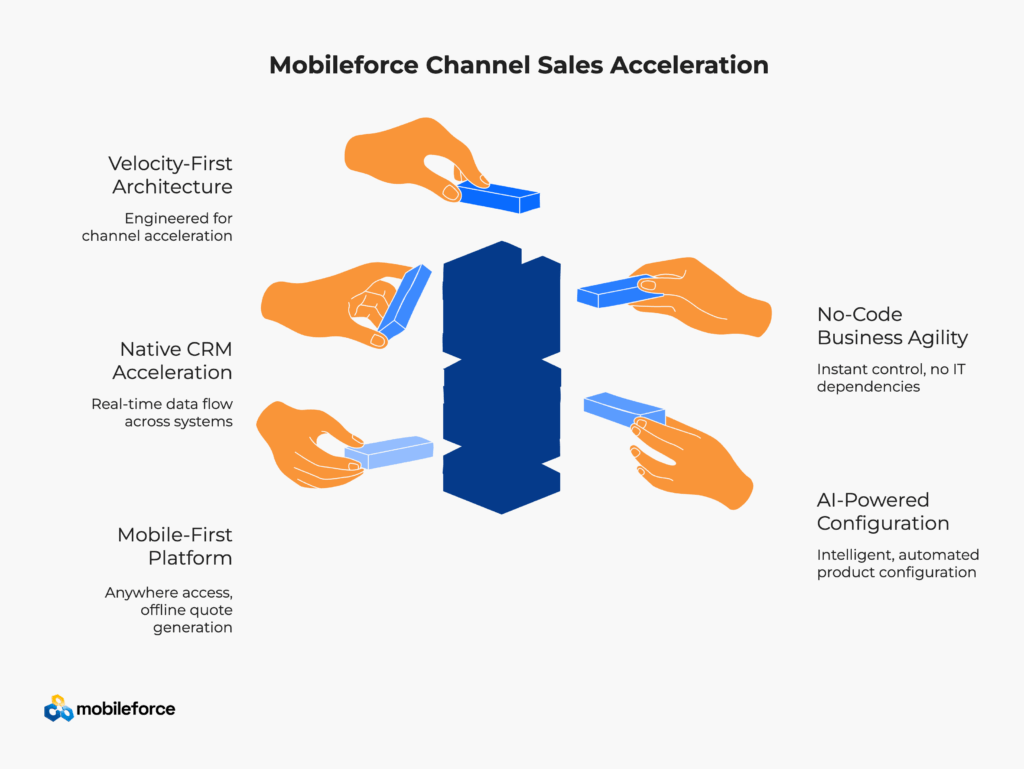
Mobileforce takes a fundamentally different approach to channel enablement. Rather than retrofitting direct sales tools for partner use, the platform was engineered specifically to eliminate velocity barriers that slow down channel operations. This acceleration-first design enables partners to move from inquiry to quote in minutes rather than days, while maintaining enterprise-grade governance and security.
No-Code Business Agility eliminates the technical dependencies that create acceleration barriers. Revenue operations teams can modify pricing rules, update approval workflows, and adapt product configurations instantly – without waiting for IT resources or vendor professional services. This business-user control enables immediate response to market changes and competitive pressures.
Instant business control includes:
Native CRM Acceleration eliminates the data lag that slows deal velocity. Whether partners use HubSpot, Salesforce, Microsoft Dynamics, or Creatio, information flows instantly across all systems, preventing the sync delays that create quote inaccuracies and slow response times.
AI-Powered Quoting Assistance through the AskCPQ AI agent transforms complex product navigation from a time-consuming bottleneck into an instant competitive advantage. The system guides partners through configuration decisions in seconds, using natural language processing and predictive analytics to accelerate response times.
AskCPQ acceleration capabilities include:
Anywhere-Access Quote Generation enables partners to close deals at the point of customer interaction. The platform’s mobile-first architecture ensures field teams can generate professional quotes instantly, even without internet connectivity, eliminating the delays that cause opportunities to slip to faster competitors.
Mobile acceleration features include:
Complete Workflow Integration eliminates the handoff delays between sales, service, and revenue recognition that slow customer onboarding. Unlike platforms that handle only quote generation, Mobileforce connects the entire customer journey – from initial configuration through service delivery and ongoing support – in a single acceleration platform.
Unified acceleration benefits include:
Mobileforce’s migration capabilities enable acceleration platform deployment in weeks, not months. This rapid implementation approach minimizes partner disruption while delivering immediate velocity improvements to channel operations.
Implementation Phase | Duration | Acceleration Benefits |
Discovery and Planning | 1-2 weeks | Requirements analysis, velocity optimization mapping |
System Configuration | 2-3 weeks | No-code platform setup, workflow acceleration |
Integration and Testing | 1-2 weeks | Native CRM integration, real-time data validation |
Partner Training and Go-Live | 1 week | Mobile-first onboarding, instant autonomy activation |
Experience instant channel acceleration with purpose-built velocity technology. Request a technical demo to see how Mobileforce eliminates speed barriers and accelerates partner autonomy.
Modern Revenue Cloud implementations typically follow a structured approach that prioritizes partner adoption and operational efficiency. The key to successful channel sales automation lies in balancing vendor governance requirements with partner autonomy needs.
Phase 1: Foundation Setup focuses on establishing core quoting capabilities and basic partner access. Organizations typically see immediate improvements in quote accuracy and processing speed during this phase.
Foundation setup activities include:
Phase 2: Advanced Automation introduces intelligent pricing rules, approval workflows, and integration capabilities. This phase often delivers the most significant ROI improvements as manual processes are eliminated.
Advanced automation features include:
Phase 3: Analytics and Optimization provides visibility into partner performance, pricing trends, and market opportunities. Advanced analytics help organizations identify high-performing partners and optimize pricing strategies.
Key Success Factors include executive sponsorship, comprehensive partner training, and ongoing support. Organizations that invest in proper change management typically see 40% higher adoption rates compared to those that focus purely on technology deployment.
Critical success elements:
Implementation Phase | Expected Benefits | Timeline to Value |
Foundation Setup | 15-25% quote speed improvement | 2-4 weeks |
Advanced Automation | 40-60% process efficiency gain | 6-12 weeks |
Analytics and Optimization | 20-35% revenue performance increase | 3-6 months |
Full Platform Maturity | 50-80% overall productivity improvement | 6-12 months |
Successful channel sales software comparison studies consistently show that technology adoption depends more on change management than technical features. Organizations must address both vendor-side and partner-side change requirements.
Partner onboarding acceleration strategies include:
Accelerate your implementation success with proven methodologies. Consult with our implementation specialists to develop your channel transformation roadmap.
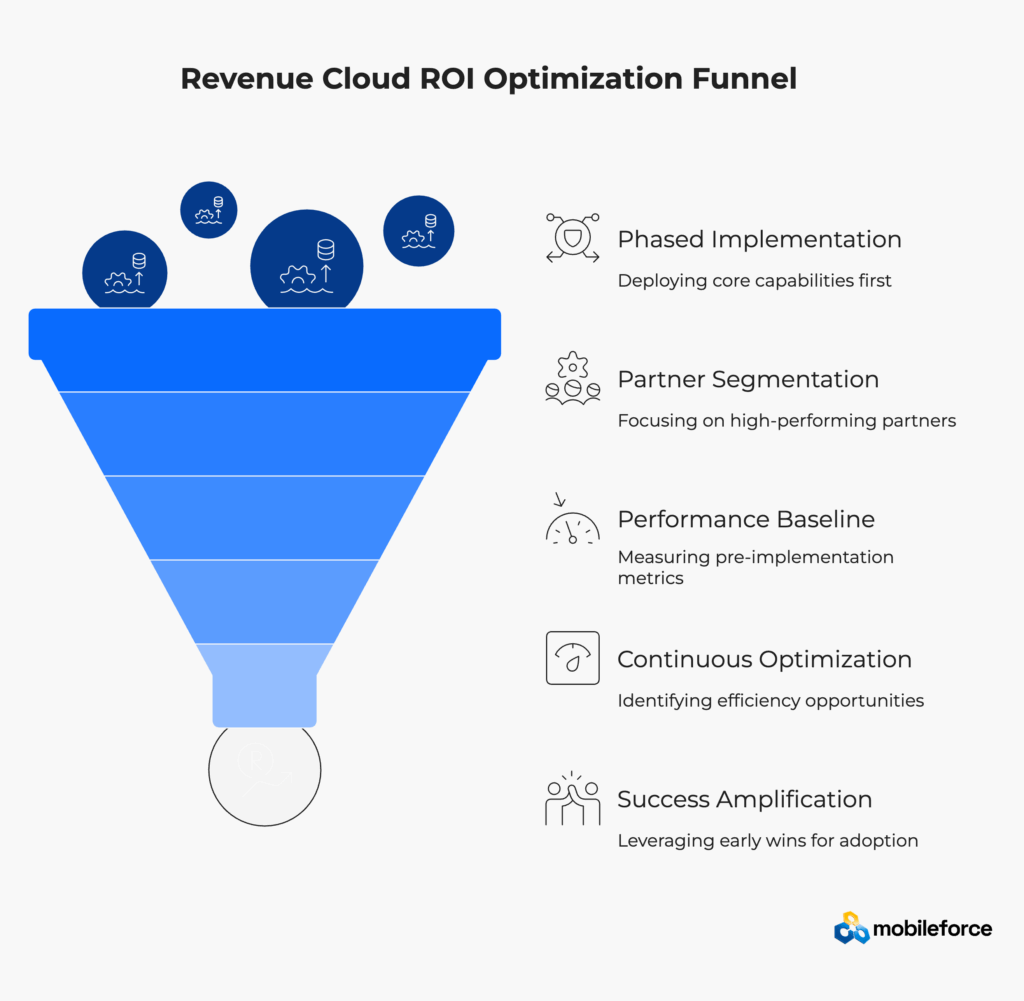
The financial benefits of modern Revenue Cloud platforms extend across multiple dimensions of channel operations. Industry research shows that best-in-class organizations achieve significant returns on revenue automation technology investments. Companies implementing CPQ platforms typically see measurable ROI within the first quarter.
Primary Financial Benefits:
Strategic Value Drivers:
Calculate your specific ROI potential. Schedule a financial impact assessment to model your channel automation business case. | Operational Efficiency | 40-60% improvement | $75K-$400K | 3-9 months |
Different industries experience varying ROI patterns based on product complexity, partner network size, and competitive dynamics:
Manufacturing and Distribution: Typically see strong ROI due to complex product configurations and pricing structures. Benefits realized within 12-18 months.
Technology and Software: Benefit from rapid quote generation and partner enablement. Strong ROI typically achieved within 12 months.
Healthcare and Medical Equipment: Experience solid ROI through compliance automation and configuration accuracy. Benefits realized within 18-24 months.
When conducting channel sales software comparison studies, organizations should evaluate total cost of ownership including:
Discover your potential ROI with Revenue Cloud automation. Contact our specialists for a customized assessment based on your specific channel operations.
Consider a mid-market manufacturing company with 200+ channel partners across North America. Before implementing a modern Revenue Cloud platform, their partner quoting process required multiple days and frequent back-and-forth communication. This scenario illustrates common challenges in distributor portal software implementations.
Initial State Challenges:
The company selected a purpose-built Revenue Cloud platform and completed implementation in 8 weeks using the following approach:
Weeks 1-2: Discovery and Setup
Weeks 3-5: Advanced Configuration
Weeks 6-8: Testing and Launch
After Revenue Cloud Implementation:
Business Impact Measurement:
Performance Metric | Pre-Implementation | Post-Implementation | Improvement |
Average Quote Time | 2-3 days | 15-30 minutes | 85% reduction |
Quote Accuracy Rate | 85% | 98%+ | Significant improvement |
Sales Cycle Length | 45 days average | 29 days average | 35% reduction |
Deal Registration Volume | 150/month | 188/month | 25% increase |
Partner Support Tickets | 300/month | 120/month | 60% reduction |
This scenario illustrates the compound benefits of purpose-built Revenue Cloud platforms that address the entire partner ecosystem rather than individual pain points. The transformation enabled:
Ready to achieve similar transformation results? Explore your implementation pathway with our channel optimization specialists.
Organizations typically progress through distinct stages as they mature their channel revenue operations. This maturity model helps companies assess their current state and plan advancement toward more sophisticated indirect sales management capabilities.
Stage 1: Manual Partner Quoting represents the traditional approach where partners depend on vendor resources for quote generation. This stage creates bottlenecks and limits scalability but provides maximum control over pricing and configuration decisions.
Characteristics of Stage 1 organizations:
Stage 2: Exposed Internal CPQ involves giving partners access to existing direct sales tools. While this improves speed compared to manual processes, it often creates user experience and governance challenges due to tool complexity.
Stage 2 implementation features:
Stage 3: Purpose-Built Partner Revenue Platform delivers optimized partner experiences while maintaining operational control. Organizations at this stage typically see the highest ROI and partner satisfaction levels through dedicated channel functionality.
Advanced Stage 3 capabilities include:
Stage 4: AI-Enhanced Revenue Orchestration represents the emerging frontier where artificial intelligence optimizes pricing, predicts partner needs, and automates routine decisions. Early adopters report significant competitive advantages through intelligent automation.
Stage 4 innovation elements:
Maturity Stage | Quote Response Time | Partner Autonomy | Technology Investment | ROI Expectation |
Stage 1: Manual | 2-5 business days | Low (high vendor dependency) | Minimal | Limited improvement |
Stage 2: Basic Portal | 4-24 hours | Medium (guided self-service) | Moderate | 100-200% within 18 months |
Stage 3: Purpose-Built | 15-60 minutes | High (full autonomy) | Significant | 200-400% within 12 months |
Stage 4: AI-Enhanced | Real-time | Optimized (intelligent assistance) | Advanced | Strong ROI within 6 months |
Most organizations currently operate at Stage 1 or 2, creating significant opportunities for competitive differentiation through advancement to Stage 3 and beyond. Successful advancement requires:
Technology Infrastructure Assessment: Evaluate current systems’ ability to support advanced channel functionality without complete replacement.
Partner Readiness Analysis: Determine partner network’s technology adoption capability and change management requirements.
ROI Justification Development: Build business case with specific financial projections and competitive advantage analysis.
Implementation Roadmap Creation: Define phased approach to minimize disruption while maximizing value realization speed.
Assess your current maturity stage and development pathway. Schedule a maturity evaluation with our channel optimization experts.
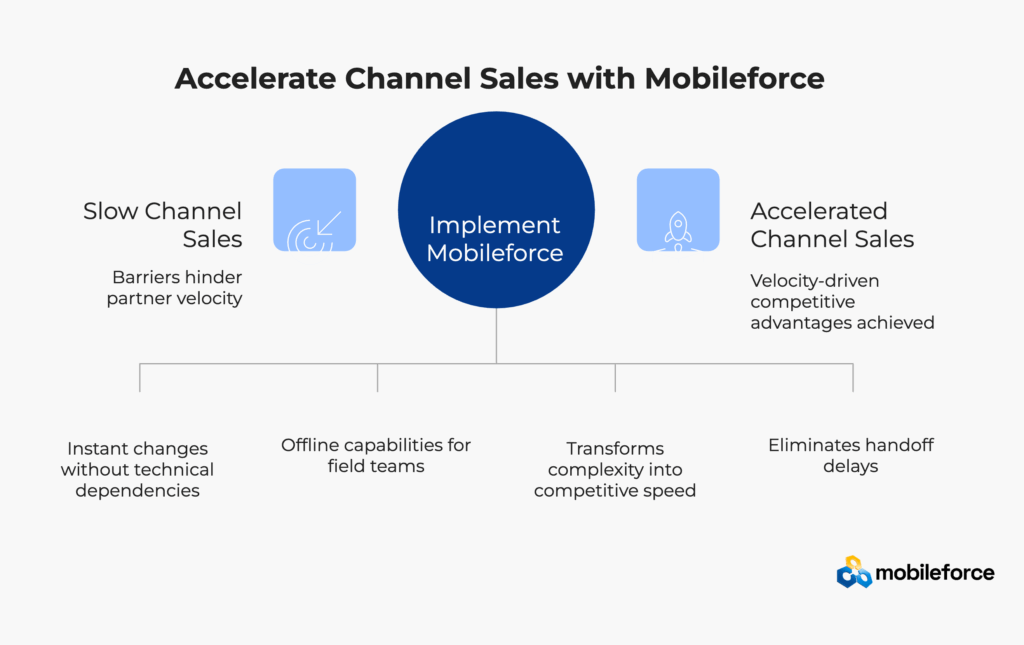
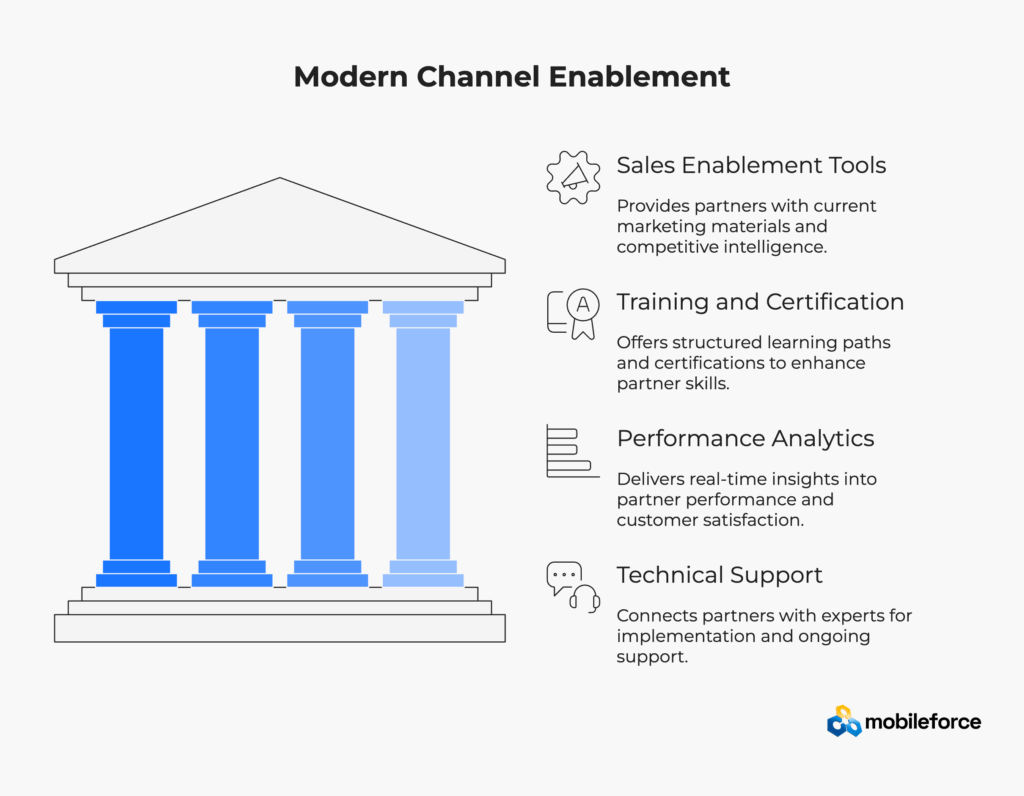
Modern channel partner enablement extends far beyond basic quote generation to encompass training, support, performance management, and strategic collaboration. Organizations seeking sustainable channel growth must implement comprehensive partner enablement platforms that address the full spectrum of partner needs and vendor requirements.
Content Management and Distribution ensures partners have access to current marketing materials, product documentation, competitive intelligence, and case studies. Advanced distributor portal software provides version control, usage analytics, and automated content updates to keep partner teams informed and effective.
Essential content enablement features include:
Partner Learning Management Systems accelerate onboarding and ongoing education through structured programs that adapt to different partner types and experience levels. Effective training integration reduces time-to-productivity while improving partner confidence and customer satisfaction.
Comprehensive training platform components:
Real-Time Performance Management provides partners with visibility into their own performance while giving vendors insights into partner effectiveness and support needs. Modern analytics platforms transform raw data into actionable insights that drive continuous improvement.
Partner performance analytics include:
Integrated Support Ecosystems connect partners directly with technical experts, implementation specialists, and ongoing customer success resources. This support integration reduces partner frustration while ensuring customer implementations succeed consistently.
Enablement Category | Basic Implementation | Advanced Integration | Partner Impact |
Content Management | Static document libraries | Dynamic, searchable repositories | 40% faster sales preparation |
Training Programs | Generic presentations | Role-based, adaptive learning | 60% faster onboarding |
Performance Analytics | Monthly reports | Real-time dashboards | 30% improvement in conversion |
Technical Support | Ticket-based support | Integrated expert access | 50% faster issue resolution |
Competitive Intelligence | Quarterly updates | Real-time market insights | 25% higher win rates |
Territory Management and Deal Registration systems prevent channel conflicts while optimizing partner collaboration. Advanced platforms use AI-powered algorithms to identify potential conflicts early and suggest resolution strategies that maximize overall revenue.
Conflict prevention capabilities include:
Transform your partner enablement strategy with integrated technology solutions. Explore Mobileforce’s comprehensive partner platform and discover how leading organizations accelerate channel performance.
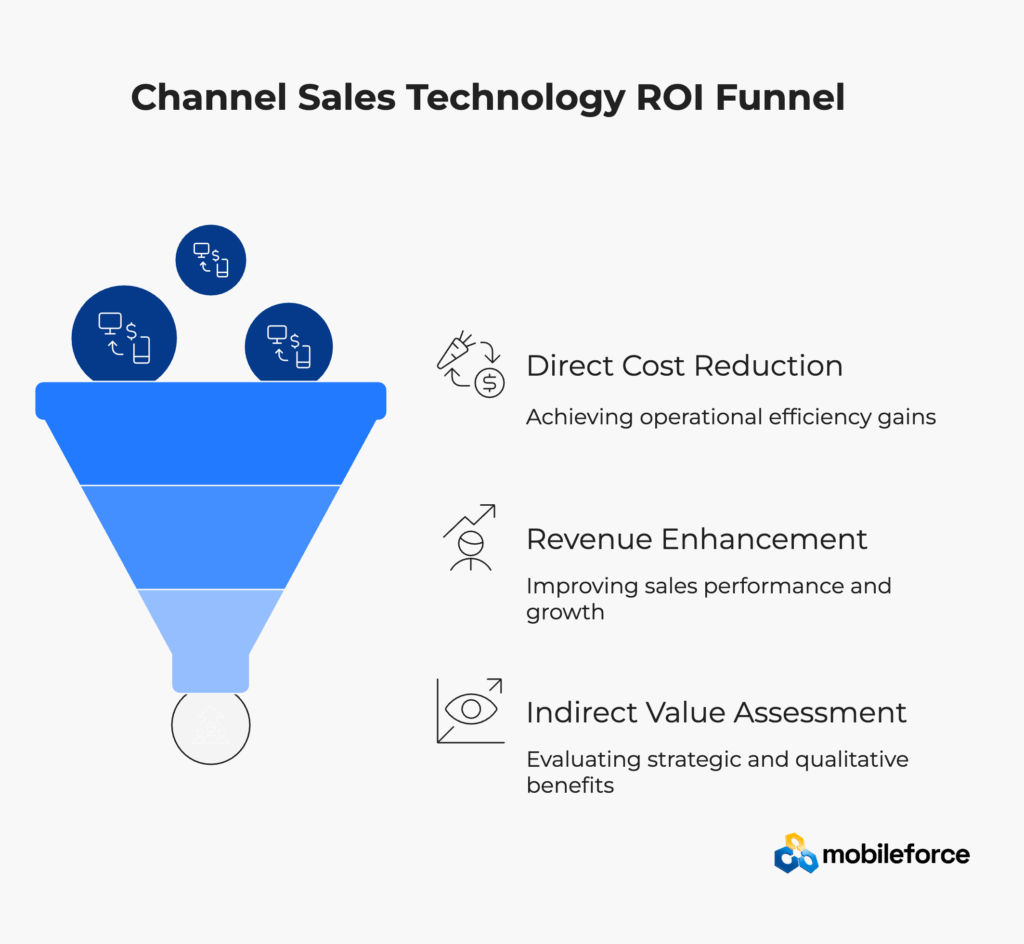
Successful Revenue Cloud implementations share common characteristics that drive adoption and ROI achievement. The most effective channel sales automation projects follow a structured approach that balances technical capabilities with organizational change management requirements.
Start with Pricing Governance by establishing clear rules and approval processes before technology deployment. Organizations that define governance frameworks upfront avoid costly rework and partner confusion during implementation phases.
Essential governance elements include:
Empower Partners with Self-Service Tools that reduce dependencies on vendor resources while maintaining appropriate governance controls. The goal is partner autonomy within defined guardrails, not vendor control of every transaction.
Self-service capability priorities:
Align RevOps to Partner Workflows rather than forcing partners to adapt to internal processes. Revenue operations should support how partners actually sell, not how vendors wish they would sell.
Workflow optimization strategies include:
Integrate Pricing Logic Across CRM and ERP Systems to ensure consistency and eliminate manual data entry. Mobileforce’s migration capabilities enable rapid integration with existing systems while minimizing disruption.
Integration best practices:
Focus on User Experience and Training to drive adoption across the partner network. Partners will only use tools that make their jobs easier and more effective than existing alternatives.
Adoption acceleration techniques include:
Implementation Area | Key Performance Indicator | Target Improvement | Measurement Timeline |
Quote Generation Speed | Average time from request to delivery | 70-80% reduction | 30-60 days |
Partner Adoption Rate | Active users vs. total enabled partners | 85%+ adoption | 90-120 days |
Quote Accuracy | Error rate in generated quotes | <1% error rate | 60-90 days |
Deal Velocity | Partner-sourced sales cycle length | 20-30% improvement | 6-12 months |
Partner Satisfaction | Platform usability and support ratings | 4.5/5.0 rating | Quarterly survey |
Effective change management addresses both vendor-side and partner-side adaptation requirements. Organizations must provide comprehensive support while maintaining momentum toward full platform utilization.
Partner communication strategies include:
Ready to implement best practices in your organization? Explore Mobileforce’s implementation approach and see how we support successful Revenue Cloud deployments.
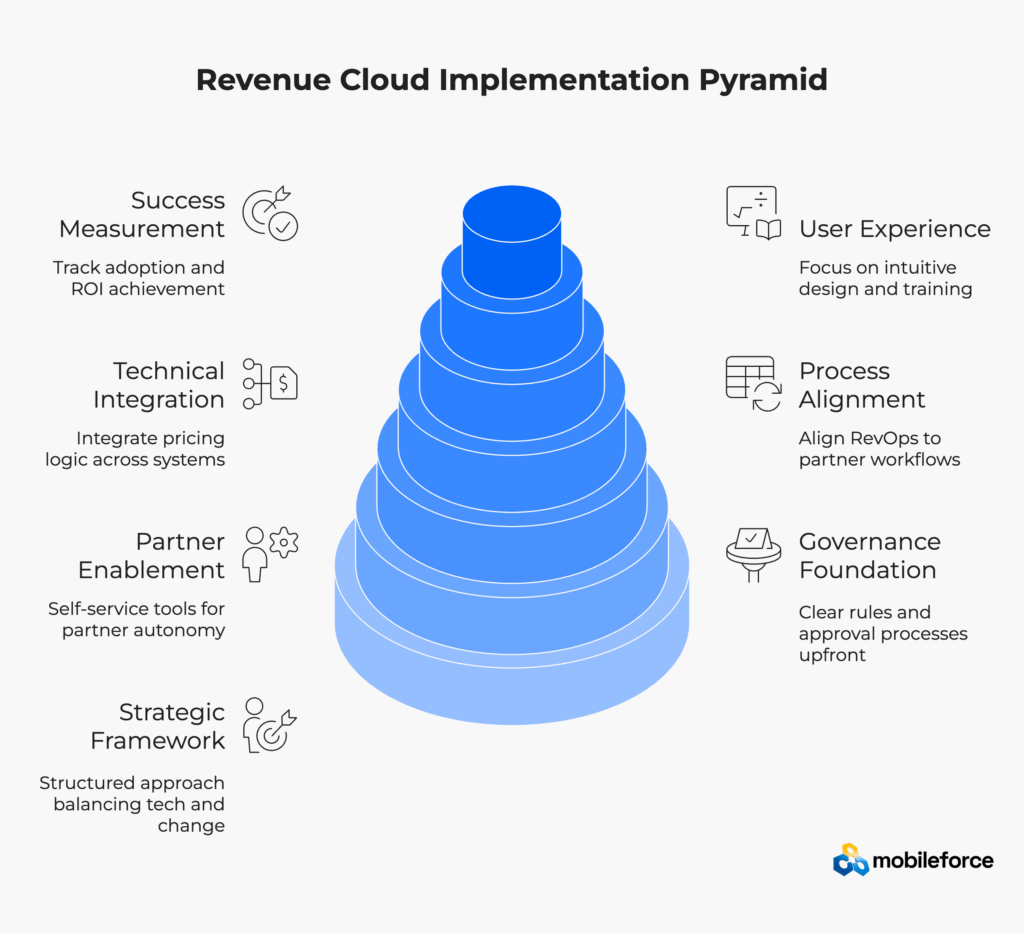
The integration of artificial intelligence into revenue cloud platforms represents the next evolution of channel sales automation. AI-powered capabilities are moving beyond basic automation to predictive analytics, intelligent recommendations, and autonomous decision-making that transforms partner enablement platforms.
Predictive Partner Performance Analytics enable vendors to identify high-potential partners before they demonstrate results. Machine learning algorithms analyze partner behavior patterns, market conditions, and historical performance to predict future revenue contributions.
Key AI applications in channel operations include:
Real-Time Channel Performance Dashboards provide unprecedented visibility into partner operations, market trends, and revenue opportunities. Modern analytics platforms process millions of data points to deliver actionable insights for channel management software optimization.
Advanced analytics capabilities include:
AI-Powered Partner Assistance through natural language processing transforms how partners interact with revenue automation technology. Advanced chatbots and virtual assistants provide instant support for product questions, pricing inquiries, and configuration guidance.
NLP applications in channel support:
Technology Trend | Current Adoption | Expected Impact | Timeline to Mainstream |
AI-Powered Pricing | 25% of platforms | 40-60% efficiency gain | 12-18 months |
Predictive Analytics | 35% of platforms | 30-50% forecast accuracy | 6-12 months |
Natural Language Processing | 15% of platforms | 70% support cost reduction | 18-24 months |
Blockchain Integration | <5% of platforms | Enhanced transparency | 24-36 months |
IoT Data Integration | 10% of platforms | Real-time service opportunities | 18-30 months |
The evolution of partner quoting solution pricing models reflects broader technology trends toward consumption-based and outcome-driven business models. Future platforms will likely integrate:
Stay ahead of technology trends with forward-thinking platform capabilities. Discover Mobileforce’s AI roadmap and see how emerging technologies enhance channel operations.
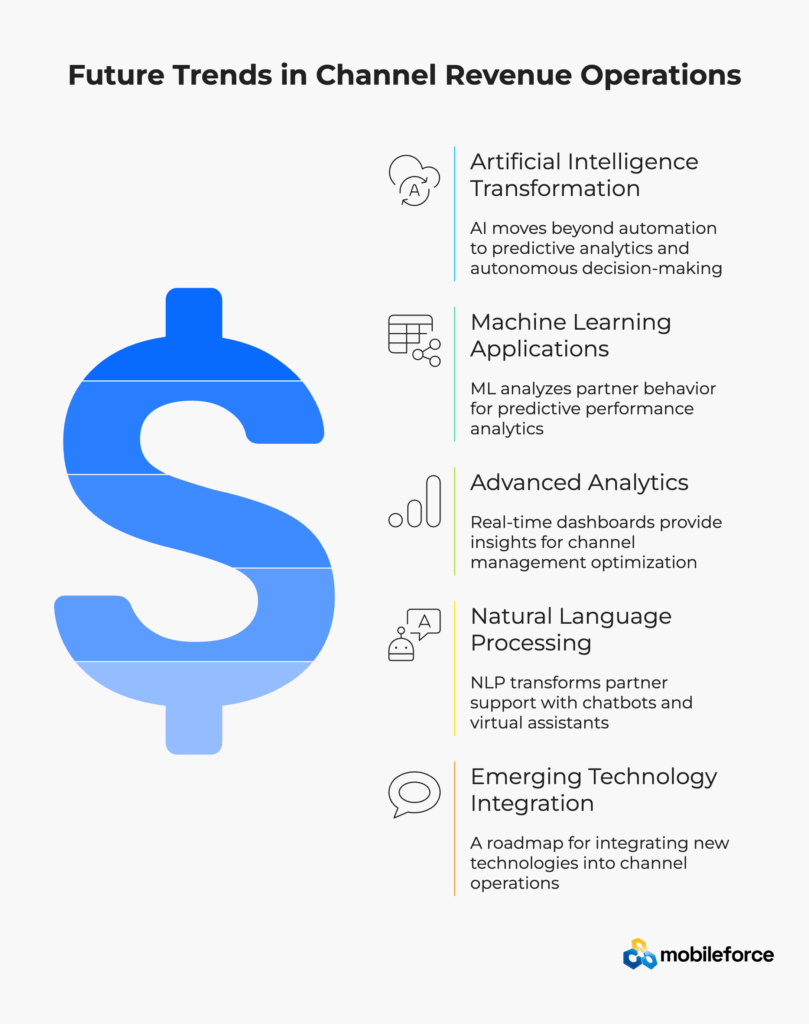
Modern buyers expect consistent, professional experiences regardless of whether they purchase directly or through partners. Organizations that excel at channel revenue operations create sustainable competitive advantages that are difficult for competitors to replicate quickly.
Speed to Quote has become a critical differentiator in complex B2B sales environments. Partners equipped with modern Revenue Cloud platforms can respond to customer inquiries in minutes rather than days, often winning deals before competitors can even submit quotes. This speed advantage compounds over time as customers develop preferences for responsive partners.
Quote response time benchmarking across industries reveals significant competitive gaps:
Pricing Consistency builds buyer confidence and reduces channel conflict. When partners can access the same pricing intelligence and approval workflows as direct sales teams, customers receive consistent value propositions regardless of purchase channel. This consistency eliminates customer confusion and supports premium positioning strategies.
Professional Presentation reflects vendor brand standards while showcasing partner expertise. Modern platforms enable partners to generate branded proposals that meet enterprise buyer expectations while highlighting local market knowledge. The combination of brand consistency with local expertise creates powerful competitive positioning.
Advanced channel sales automation creates barriers to competitive entry by establishing complex integration requirements and partner training investments. Organizations with mature Revenue Cloud platforms benefit from:
Network Effects: As more partners adopt the platform, value increases for all participants through shared insights and best practices.
Data Advantages: Comprehensive partner and customer data enables continuous optimization of pricing, configuration, and market strategies.
Switching Costs: Partners invested in training and workflows are less likely to switch vendors, creating partner loyalty and reducing churn.
Competitive Advantage Category | Traditional Approach | Revenue Cloud Approach | Competitive Impact |
Quote Response Time | 2-5 business days | 15-30 minutes | Win 60-80% more deals |
Pricing Accuracy | 85-90% | 98%+ | Reduce competitive pricing disputes |
Partner Autonomy | High vendor dependency | Self-service enabled | Attract top-tier partners |
Brand Consistency | Variable quality | Standardized excellence | Premium positioning support |
Data Visibility | Limited reporting | Real-time dashboards | Proactive market response |
Customer Experience | Inconsistent touchpoints | Unified journey | Higher satisfaction scores |
When conducting channel sales software comparison evaluations, organizations should assess vendors’ ability to deliver sustainable competitive advantages rather than focusing solely on feature lists. Key evaluation criteria include:
Platform Roadmap and Innovation: Assess vendor investment in AI, analytics, and emerging technologies that will drive future competitive advantages.
Partner Ecosystem Health: Evaluate the vendor’s own partner network and channel strategy as indicators of platform viability and support quality.
Integration Ecosystem: Consider the breadth and depth of platform integrations with existing technology stacks and future expansion requirements.
Scalability Architecture: Analyze platform ability to support rapid partner network growth without performance degradation or cost multiplication.
Position your organization for sustainable channel success. Schedule a competitive analysis session to benchmark your current channel operations against market leaders.
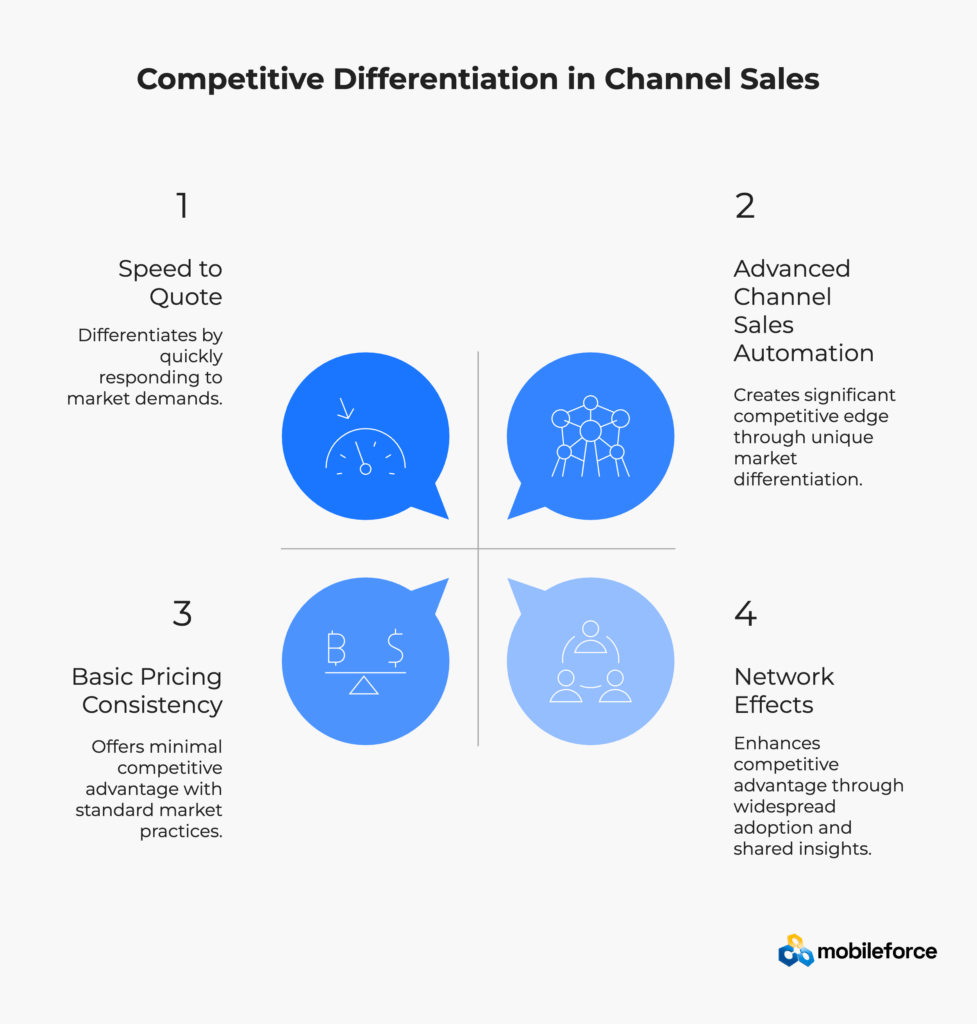
Organizations evaluating channel sales software comparison options require systematic approaches to ROI calculation that account for both direct and indirect benefits. The complexity of channel operations demands sophisticated financial models that capture multiple value dimensions across different timeframes and organizational levels.
Operational Efficiency Gains represent the most measurable ROI components in channel sales automation investments. These direct benefits include reduced manual processing time, eliminated duplicate data entry, and automated approval workflows that accelerate deal velocity.
Primary cost reduction categories include:
Revenue Performance Improvements often provide greater ROI than cost reductions through faster deal closure, increased deal sizes, and improved partner performance. Advanced analytics enable precise measurement of revenue attribution to platform capabilities.
Revenue enhancement measurement includes:
Strategic Benefits create long-term value that may not appear in quarterly financial reports but significantly impact organizational competitiveness and market position. These benefits require sophisticated measurement approaches that consider qualitative improvements and competitive positioning.
Strategic value measurement approaches:
ROI Component Category | Timeline to Value | Measurement Methodology | Typical Value Range |
Quote Processing Efficiency | 30-60 days | Time and motion studies | $100K-$500K annually |
Partner Satisfaction Improvement | 90-120 days | Survey data and retention analysis | $150K-$750K annually |
Deal Velocity Enhancement | 6-12 months | CRM data analysis | $200K-$1M annually |
Strategic Competitive Advantage | 12-24 months | Market share and growth analysis | $500K-$2M annually |
Innovation and Expansion | 18-36 months | New market revenue tracking | $1M-$5M annually |
Modern distributor portal software vendors offer various pricing approaches that align with different organizational priorities and growth stages. Understanding these models enables more accurate ROI projections and vendor selection optimization.
Common pricing model categories include:
Total Cost of Ownership Analysis must include initial implementation expenses, ongoing operational costs, and hidden expenses that emerge during scaling phases. Comprehensive TCO assessment prevents budget surprises and enables accurate ROI projections.
Implementation cost components include:
Organizations can maximize Revenue Cloud ROI through strategic implementation approaches that prioritize high-impact capabilities while minimizing implementation complexity and partner disruption.
ROI optimization tactics include:
Calculate your specific ROI potential with expert guidance. Schedule a detailed assessment to model the financial impact of Revenue Cloud implementation for your unique channel operations.
The shift toward indirect sales channels represents more than a tactical change in go-to-market strategy. It’s a fundamental transformation in how B2B organizations create and capture value in increasingly competitive markets where customer acquisition costs continue rising and buying cycles become more complex.
Companies that recognize this shift and invest in purpose-built Revenue Cloud platforms position themselves for sustained growth. The statistics are compelling: companies with strong channel partner programs experience higher market share and revenue growth compared to those relying primarily on direct sales approaches. Industry research consistently demonstrates that organizations with mature channel operations achieve:
The competitive advantage goes to organizations that move beyond generic CPQ tools toward platforms engineered specifically for channel velocity and partner acceleration. Organizations need solutions that eliminate speed barriers while maintaining governance, provide instant business user control while preserving security standards, and scale partner autonomy as networks grow.
Critical evaluation criteria for channel acceleration platforms include:
Mobileforce’s Revenue Operations Cloud represents the next generation of acceleration-focused platforms engineered specifically for channel velocity. With instant business-user control through no-code configuration, native CRM integrations that eliminate data lag, and AI-powered assistance that transforms complexity into speed, the platform delivers the acceleration capabilities that separate market leaders from followers.
Channel acceleration advantages include:
The question isn’t whether to invest in channel acceleration capabilities. It’s how quickly organizations can eliminate speed barriers before competitors establish unassailable velocity advantages. Partner ecosystems naturally gravitate toward vendors that enable fastest response times and most autonomous operations – making acceleration platform selection a strategic imperative.
Velocity-driven market dynamics favor organizations that act decisively:
Transform your channel operations into acceleration-driven competitive advantages. Schedule a comprehensive demonstration to see how Mobileforce eliminates speed barriers, accelerates partner autonomy, and delivers sustained velocity leadership.

What is a Revenue Cloud platform and how does it differ from traditional CPQ software?
A Revenue Cloud platform provides end-to-end revenue management capabilities that extend beyond basic configure-price-quote functionality. While traditional CPQ software focuses on quote generation, Revenue Cloud platforms orchestrate the entire quote-to-cash-to-service process including partner management, pricing governance, contract management, and service delivery coordination. They’re designed to support complex channel operations with self-service capabilities for partners while maintaining centralized control and visibility for vendors.
How long does it typically take to implement a Revenue Cloud solution for channel sales?
Implementation timelines vary based on organizational complexity and integration requirements. Mobileforce implementations typically deploy significantly faster than legacy platforms. The key factors affecting implementation speed include the number of CRM integrations required, complexity of pricing rules, extent of customization needed, and partner onboarding requirements.
What ROI can organizations expect from Revenue Cloud investments?
Organizations typically see multiple ROI dimensions from Revenue Cloud investments. Direct benefits include 10-15% reduction in sales cycles, 20-43% improvement in deal closure rates, and improved quote accuracy through automation. Indirect benefits include higher partner satisfaction rates, improved forecasting accuracy, and reduced sales operations overhead. Industry research indicates best-in-class implementations achieve strong returns on investment, with most organizations seeing positive ROI within 6-12 months.
How do Revenue Cloud platforms ensure pricing consistency across channel partners?
Modern Revenue Cloud platforms use centralized pricing engines with role-based access controls and approval workflows. Partners access real-time pricing through automated rules that consider factors like volume discounts, customer tiers, competitive situations, and regional adjustments. Exception pricing requires approval through predefined workflows, ensuring governance while enabling flexibility. All pricing decisions are tracked and auditable, providing visibility into margin management and partner performance.
What integration capabilities are required for successful Revenue Cloud deployment?
Successful Revenue Cloud platforms require seamless integration with CRM systems (HubSpot, Salesforce, Microsoft Dynamics), ERP platforms for inventory and fulfillment data, financial systems for billing and payment processing, and partner portals for self-service access. Mobileforce provides native integrations with major CRM platforms and API connectivity for ERP systems. Real-time data synchronization ensures partners always work with current pricing, inventory levels, and customer information.
How do Revenue Cloud platforms support partner training and adoption?
Modern platforms prioritize user experience and provide comprehensive enablement resources. Key adoption strategies include intuitive, no-code interfaces that reduce training requirements, guided workflows that walk partners through complex configurations, embedded help and best practices, automated onboarding sequences, and ongoing support through multiple channels. Organizations typically see 40% higher adoption rates when they invest in comprehensive partner enablement programs alongside technology deployment.
What security and compliance features should organizations expect from Revenue Cloud platforms?
Enterprise-grade Revenue Cloud platforms provide role-based access controls, data encryption in transit and at rest, audit trails for all pricing and configuration changes, compliance with industry standards (SOC 2, GDPR, etc.), and secure API connectivity for integrations. Mobileforce maintains enterprise security standards including ISO certifications and regular security audits. Partner access is controlled through identity management integration and permission-based feature access.
How do Revenue Cloud platforms handle complex product configurations for channel sales?
Advanced Revenue Cloud platforms use visual configurators with compatibility rules, automated validation, and intelligent recommendations. Partners can configure complex products through guided workflows that prevent invalid combinations while suggesting complementary options. The platforms maintain product catalogs with hierarchical relationships, pricing dependencies, and availability constraints. AI-powered assistants help partners navigate complex catalogs and identify optimal configurations for specific customer requirements.